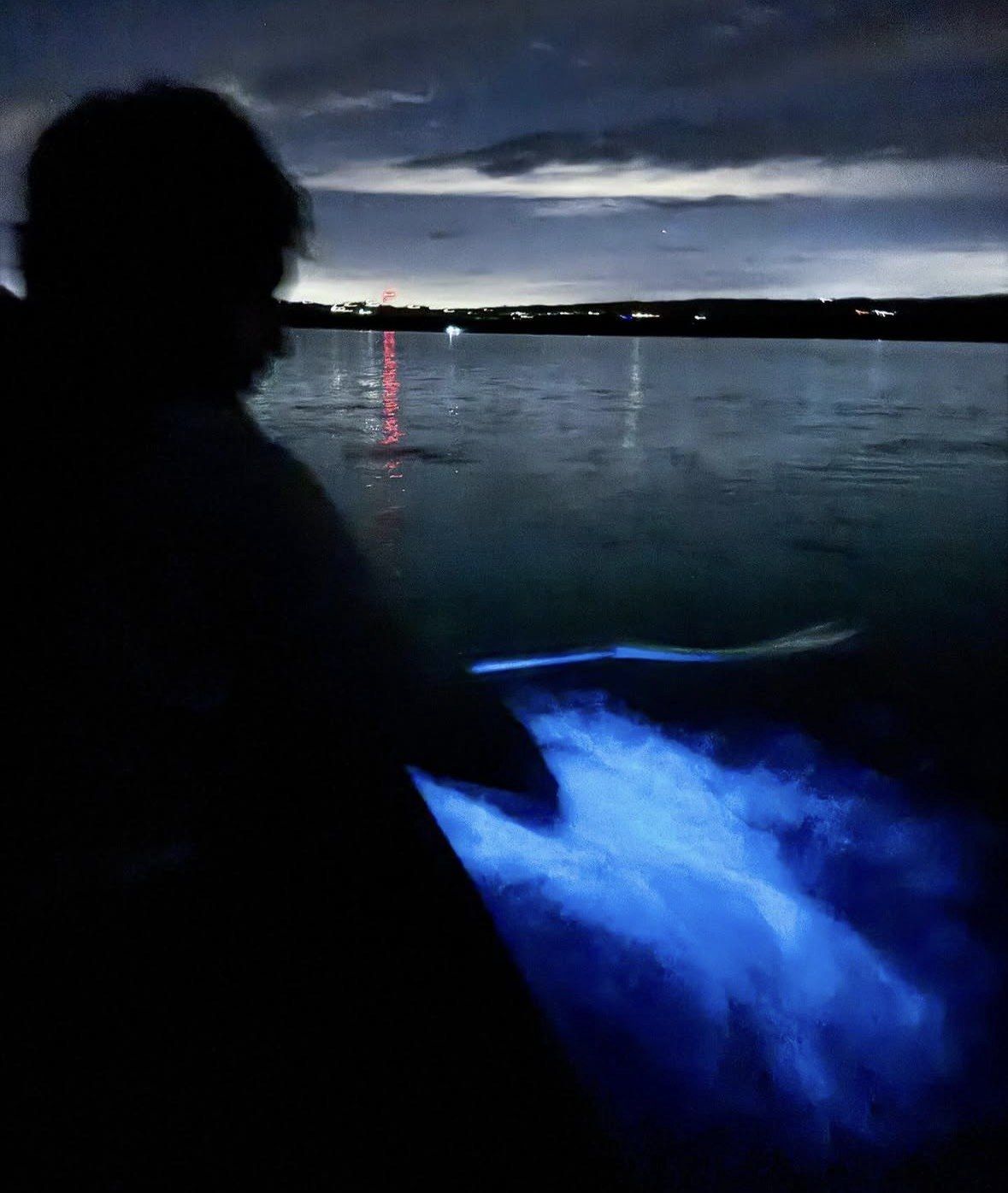
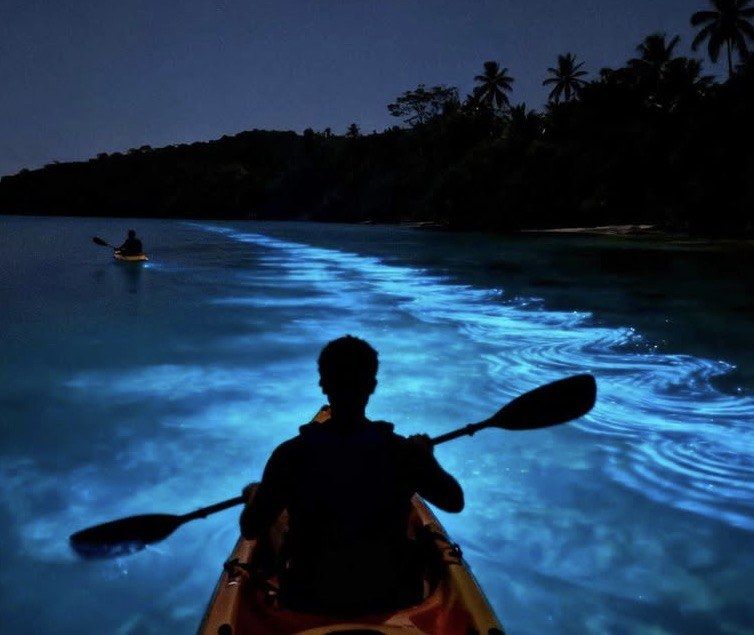
In shortNo. The dinoflagellate that makes Mosquito Bay glow lives in the lagoon all year, but brightness rises and falls with the ecosystem and with moonlight, and the bay has gone dark three times this century. The most recent figure, dated 9 October 2026, describes a reading of effectively zero for the final week of September 2026, the end point of a slide that started in July.
Effectively zeroReadings, late September 2026
ThirdBlackout this century
~7 monthsAbsence after Hurricane Maria
700,000Cells per gallon, Guinness 2006
What the bay has all year
One species does the work: Pyrodinium bahamense var. bahamense, counted week by week by the biologist at the Vieques Conservation & Historical Trust, which co-manages the reserve with Puerto Rico's Department of Natural and Environmental Resources. The cells live in the lagoon through all twelve months.
Brightness is the part that moves. Operators describe a glow visible year round under conditions that shift, because the ecosystem is dynamic, and the record supports that framing: the water has dimmed to almost nothing three separate times this century. So the answer to is Mosquito Bay always bioluminescent runs in two halves. The organisms are in the lagoon every night of the year. The light they give off has gone missing for months at a time.
Two forces move the number on any given night. Lagoon health is one, and nobody in a kayak can influence it. Competing light is the other, and you decide that one yourself when you choose a date and a departure time.
Mosquito Bay bioluminescence now: the October 2026 picture
The number to plan around is the one published on 9 October 2026: bioluminescence at effectively zero for the closing week of September 2026. Readings had been sliding gradually since July 2026, and this counts as the third blackout of the bay this century.
The agency responsible has acknowledged the problem. Waldemar Quiles, secretary of DRNA, says technical staff have been working through the falling bioluminescence readings since July, and he describes the drop as a matter of great importance to the agency. No cause has been named publicly. Weekly counts by the trust continue, but none of them land on a public dashboard, so the practical move is to ask your operator where the latest number sits before you commit money you cannot get back.
Life on the island has not stopped. The mayor has said visitors still arrive with the bay unlit and expected improvement by November, and tour companies keep publishing nightly departures. Treat any forecast of a return as an expectation.
Hold a dark-sky night you can cancel
The Bioluminescent Bay Kayak Trip from Vieques is a 2-hour paddle from $65, with the ride from the Calle Flamboyan meeting point in Esperanza out to the Bio Bay entrance in the price and the whole amount returned on cancellations made 24 hours or more ahead of departure. A date near a new moon costs you nothing to hold while you watch the counts.
★ 4.5/5 · 1,243 reviews
Why Mosquito Bay is not glowing, and how long recoveries took
Both earlier blackouts ended with the lagoon lighting again, which is the most useful thing in the record. The 2014 episode passed. The 2017 gap, which followed Hurricane Maria, ran about seven months with no organisms in the water before the light returned. Plan on a recovery measured in months.
Pressures on the water are documented even in good years. The mangrove fringe at the mouth of the bay was almost entirely lost to Maria, and the scientists who assessed that damage set natural regrowth at 15 to 30 years. Sediment and runoff off the access road is a recognised threat as well, enough that the EPA funded a two-year project worth $74,999 with the trust, DRNA and the USGS to keep that runoff out of the bay.
| Episode | What the record shows | Outcome |
|---|
| 2014 | Bioluminescence faded | The bay recovered |
|---|
| 2017, after Hurricane Maria | Organisms absent from the bay; almost total mangrove mortality at the mouth | Recovered after roughly seven months |
|---|
| 2026 | Gradual decline since July, effectively zero in the last week of September; third blackout this century | DRNA technical staff evaluating; no cause named |
|---|
The four things you can still control on your night
Nobody can promise you light. The avoidable reasons for a weak night can all be removed, and all four are settled before you get in a kayak.
Guides are out on the water every evening and read conditions before they launch. When weather is judged extreme or dangerous the operator cancels and refunds the trip, which is a good argument for booking an early night in your stay rather than your last one. A cancelled first attempt still leaves room for a second.
- Moon phase: aim for the nights close to a new moon, the darkest stretch of the cycle. On the calendar from here that means 9 November 2026, then 8 December 2026, then 7 January 2027.
- Nights nobody runs: every full moon takes three nights out of the month, because no company is allowed out on the eve of it, the night itself or the night after. Published full-moon dates for late 2026 disagree, so confirm the closed dates with the operator.
- Departure time: published departures on the bay run from 6:00 to 9:00 pm AST, and the later you go the darker the sky. Take 8:00 or 9:00 pm unless you are tied to a boat out.
- Repellent: anything containing DEET stays behind, since it kills the dinoflagellates that produce the light and tours do not allow it. Bring DEET-free spray, skip sunscreen and lotion, and remember swimming in the bay is prohibited by DRNA.
- Your guide: a conservation certification program coordinated with DRNA covers the people working the bay, so check that the concessionaire you book holds it.
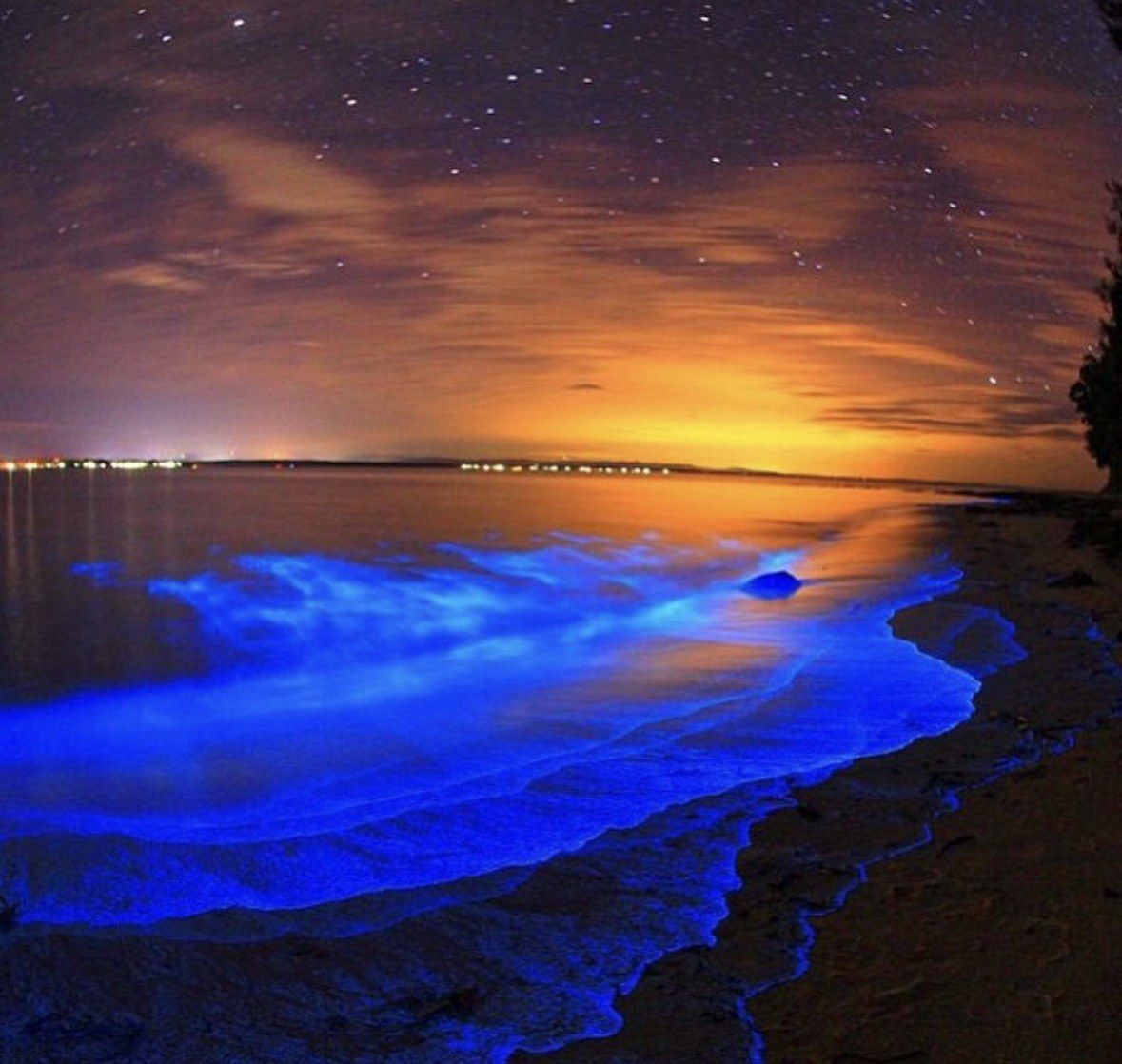
Book with realistic expectations, or wait
Travel you cannot unwind is the thing to avoid while readings sit where they are, especially if the glow is the single reason for the trip. Ferry tickets are non-refundable under the operator's own terms, transferable at most twice and only up to one hour before departure, so the risk on the transport side lands on you.
If you want Vieques anyway, the beaches, the refuge, a couple of nights in Esperanza, go and treat the bay as the part that may or may not deliver. Book a date within a few nights of a new moon, take a late departure, and hold a tour you can drop: the trips listed on this site refund in full when cancelled at least 24 hours before the scheduled departure time. That is the working answer to is Mosquito Bay always bioluminescent, so check the moon first, then the ferry or the flight, then the tour.
Questions people ask
Are tours still running while the bay is dark?
Tour companies on Vieques are still publishing nightly departures, and the mayor has said visitors keep arriving even without the bay glowing. Whether DRNA has suspended or restricted anything during this specific episode is not something we could confirm from an official notice, so ask the operator when you book. Tourism on the island has continued through the blackout.
Do operators refund if the bay does not glow?
No operator page we could open states a policy for a night with no glow, so do not count on one. What is published is that weather judged extreme or dangerous means the trip is cancelled and refunded, and that the tours listed on this site refund in full if you cancel at least 24 hours before the scheduled departure time. Use that 24-hour window as your safeguard.
How can I check the bay's current status before I travel?
Weekly dinoflagellate counts come from the co-managing trust's biologist, but the results do not appear on a public dashboard. The trust keeps an office at 138 Calle Flamboyan in Esperanza, Monday to Friday 8 am to 4 pm, and the licensed operators are on the water every night. Ask one of them for the latest count before you buy non-refundable travel.
Is there a brighter season at Mosquito Bay?
No seasonal calendar comes from the official sources. What moves reliably is the lunar cycle: operators advise scheduling near a new moon, when there is least moonlight, and nobody may run on the three nights around a full moon. Pick your dates off the moon, then check where the counts stand.
Can I see the glow from the shore or from the refuge trail?
Bioluminescence is seen from the water at night, and the bay can only be entered with a licensed concessionaire. There is a moderate 2.5-mile trail up to an observation platform above the bay, kept by the U.S. Fish and Wildlife Service and starting at the refuge entrance parking lot, but it is a daytime walk and the refuge gates shut in the evening. Use it for orientation and keep the tour for the glow.
Read also