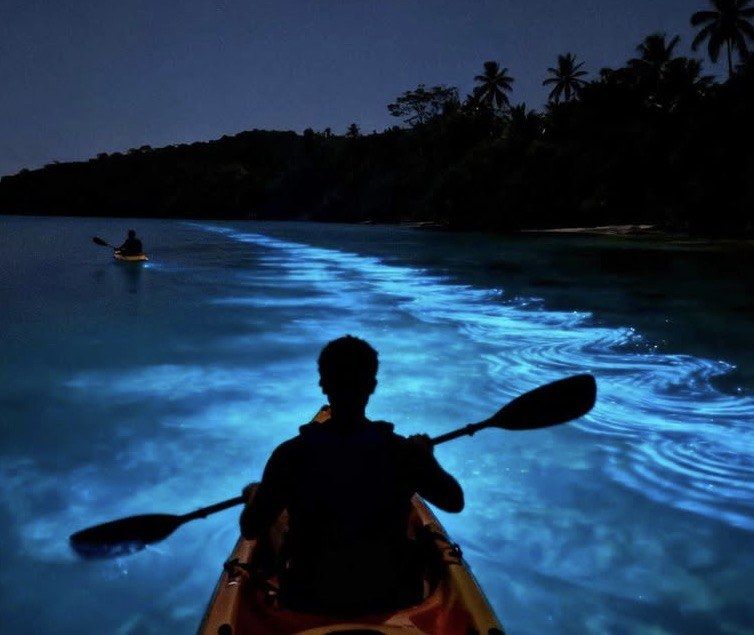
In shortMosquito Bay at night begins with check-in at a meeting point in Esperanza or across from the Sun Bay beach entrance, then a briefing on paddling and reserve rules, the ride to the Bio Bay entrance, and time on the water with a licensed concessionaire. Published departures run from 6:00 to 9:00 pm AST, trips last 40 minutes to 2 hours, and groups do not exceed ten people.
6:00 to 9:00 pmpublished departure slots
10 peoplemaximum group size
2 hourskayak trip on the bay
24 hourscancellation window
What to expect at Mosquito Bay before you reach the water
Check-in happens on land, well away from the lagoon. For the two-hour kayak trip, the spot to find is on Calle Flamboyan in Esperanza: count four houses south of the Green Store, look for the yellow and green house, and Rainbow Realty is right alongside. The clear-kayak trip and the pontoon tour gather across the street from the Sun Bay beach entrance sign on Route 997. Turn up ahead of your departure time; lead times vary by operator and sit in the table below.
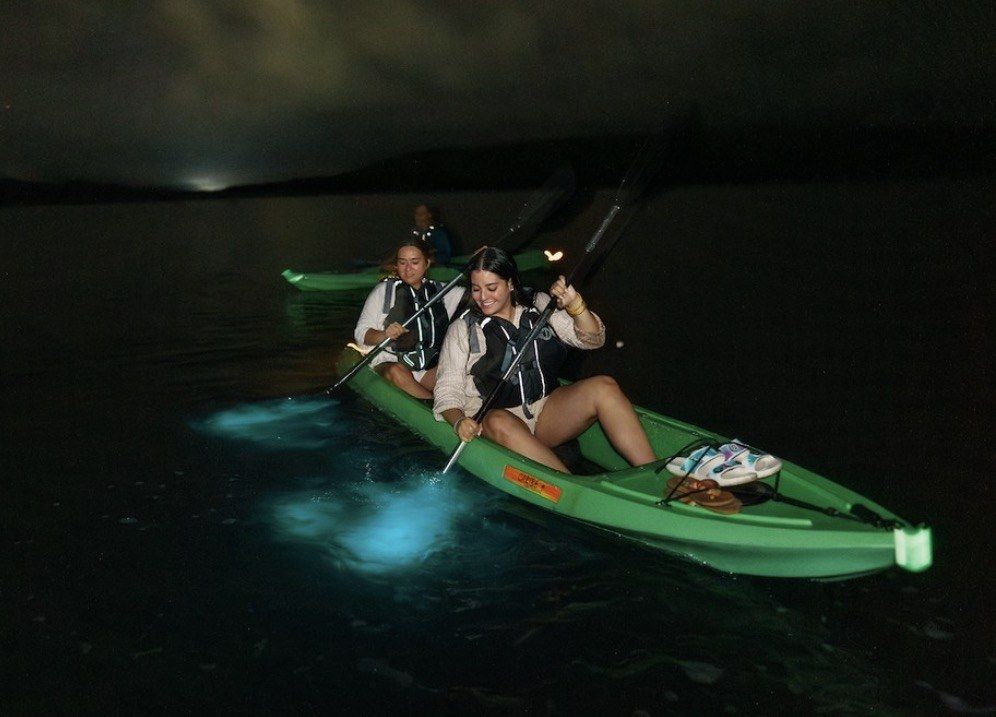
The briefing is short and covers two things: how to hold and use a paddle in a tandem, and how to behave inside a protected natural reserve. One rule shapes the whole evening, because Puerto Rico's Department of Natural and Environmental Resources bans swimming here and the operator is not allowed to let anyone slip in, so you stay in your seat from launch to landing. DEET repellent is banned on these trips because it kills the dinoflagellate that produces the glow, so bring a DEET free spray instead, and leave sunscreen and lotion out of the evening as well, since their use is restricted too. The kit that earns its place in the hatch is a towel, that DEET free spray, and sandals, flip flops or water shoes.
A vehicle takes you from the meeting point out to the bay entrance. On the two-hour Bioluminescent Bay Kayak Trip from Vieques, from $65, that round trip is in the fare with the paddle, a life jacket and the guide. The 1.5-hour clear-kayak tour runs the same shuttle from its Sun Bay meeting point, and the pontoon tour collects you in an air-conditioned vehicle. That shuttle is also the only way in, since the lagoon takes visitors only in the company of a licensed concessionaire, and tourist runs by jet ski or motorboat have no place inside it.
Mosquito Bay departure times and when to check in
Published departures on the bay fall between 6:00 and 9:00 pm AST, and the latest slot you can get is the one to take. The organisms behave the same way all evening, but the sky keeps darkening, and contrast is what you came for. The one good reason to choose 6:00 pm is a boat off the island: in high season that departure leaves time for the 9:30 pm ferry, which is the operators' own claim rather than anything on the official route page, so confirm it on the day.
Put the bay on the first full night of your stay rather than the last. Weather judged extreme or dangerous means the operator cancels and refunds, and the tours listed here return the full amount if you cancel at least 24 hours before the scheduled departure time, so an early slot leaves room for a second attempt later in the week.
Check the moon first. Three nights around each full moon are closed to every operator on the bay, the one before, the night itself and the one after, under a restriction attributed to DRNA, which writes off roughly three evenings in every lunar month. The darkest skies sit around a new moon, which next falls on 9 November 2026, then 8 December 2026 and 7 January 2027. Published calendars disagree on the late-2026 full-moon dates, so get the closed nights for your week from the operator before you settle on a slot.
| Trip | Check-in or meeting arrangement | Length |
|---|
| Bioluminescent Bay Kayak Trip from Vieques, from $65 | Calle Flamboyan in Esperanza, next to Rainbow Realty, at the time on your confirmation | 2 hours |
|---|
| Vieques island Biobay Kayaking Tour, from $60 | Across from the Sun Bay beach entrance, always 25 minutes before the tour time, so a 7:00 pm tour means 6:35 pm | 1.5 hours |
|---|
| Bioluminescent Boat Tour in Mosquito Bay, from $85 | Pickup in front of the Sun Bay entrance in an air-conditioned vehicle | 40 minutes |
|---|
The two-hour paddle, transport included
Two hours on the water from $65 with the ride from the Esperanza meeting point out to the Bio Bay entrance, paddle, life jacket and guide in the fare, which is the simplest shape for a first night on the bay.
★ 4.5/5 · 1,243 reviews
Time on the water, and what the guide covers
Ten people is the ceiling on a group, and the hour and a half or so inside the reserve passes slowly. You paddle in a line behind the guide, stop, and spend most of the time sitting still while the guide talks. Movement triggers the flashes, so a stroke, a hand dipped against the hull or the wake of a pontoon is where you look rather than out at the horizon.
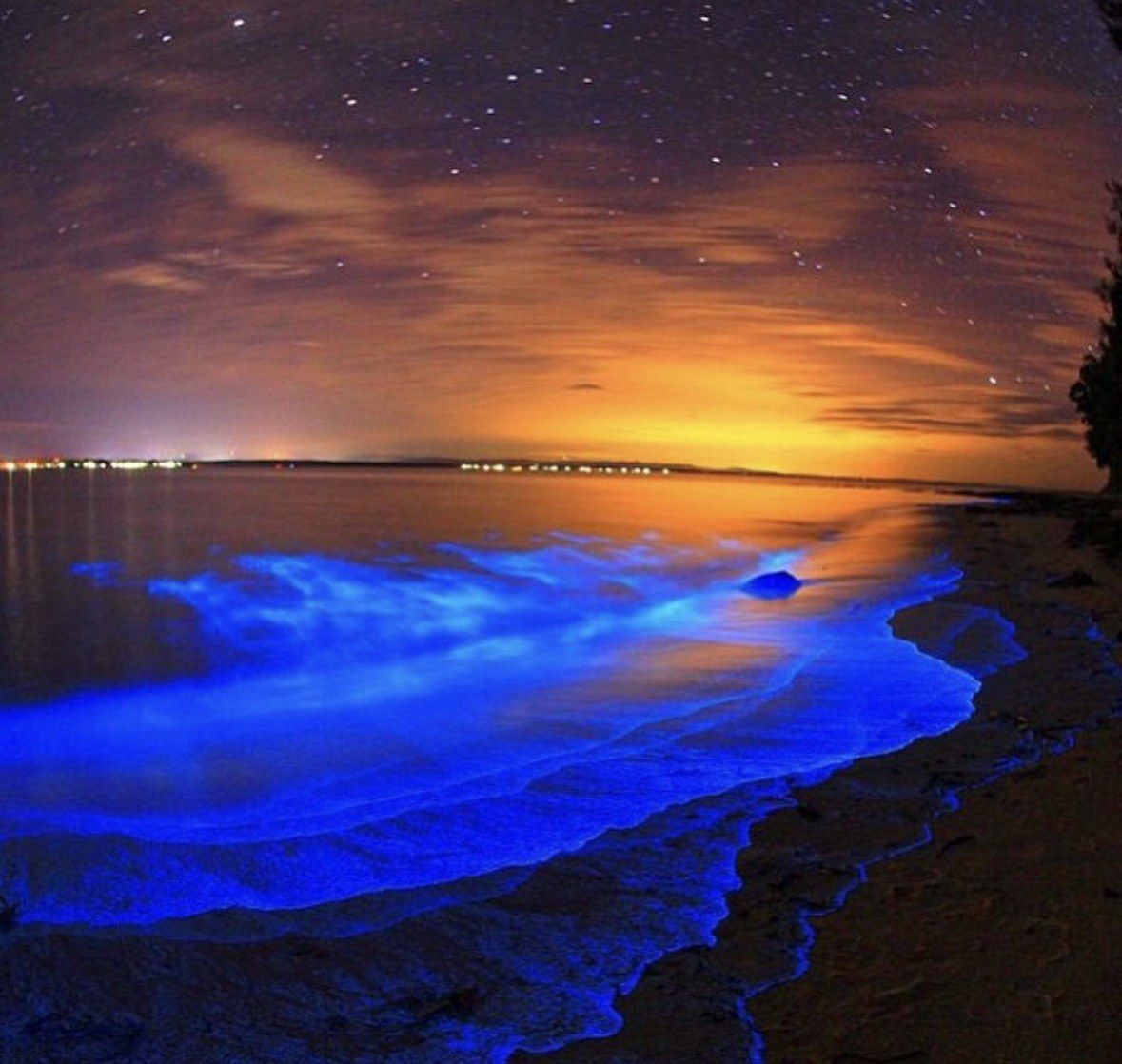
The talk is about one organism, Pyrodinium bahamense var. bahamense, and the biologist at the co-managing trust runs a fresh count on it every week. That trust has served Vieques for 40 years and handles erosion control and water-quality monitoring alongside the counts. The 2006 Guinness World Records title for the brightest bay of its kind rests on a figure of up to 700,000 dinoflagellates per gallon of water, and the citation attached to the 1980 National Natural Landmark proclamation ranks this bay as the best example of a bioluminescent bay in the United States. The guide does not skip the damage either: EPA calls it the only pristine bioluminescent bay in Puerto Rico, with its water in DRNA's Class SA bracket at the top of the ecological and recreational scale, while mangrove mortality at the mouth was close to total after Hurricane Maria and the scientists who assessed it put natural regrowth at 15 to 30 years.
No lighting exists on the lagoon, so the sky gets a share of the commentary on a new-moon night. Your guide should be a certified concessionaire: guides and operators on the bay work under a conservation certification program coordinated with DRNA, which is why the group stays small and nobody gets in the water.
Darkness, phone cameras and the lights you bring
Plan to look at this rather than record it. The flashes are brief, low in contrast and happen in the few centimetres beside the hull, close to the worst case for a phone sensor in near-total darkness. You get back noise, a black frame, or both. A tripod is no use in a tandem kayak, and there is no room for camera gear in the boat.
Light you bring with you is the only thing out there that competes with the glow. A phone at full brightness or a white torch resets night vision for everyone in the boat, including yours, and eyes take several minutes to adjust back. If you genuinely need to see something in the kayak, red light is the gentler choice. The better habit is to put the phone away at the launch and leave it there until you are back on land.
Leave big bags at your lodging. Wear clothes and shoes you do not mind soaking, carry the towel and the spray, keep your hands free.
Where the bay stands tonight
As of 9 October 2026, what the night offers is darkness: readings had been sliding since July 2026 and came in at effectively zero across the last week of September 2026. It is the third blackout recorded here this century. Waldemar Quiles, who heads DRNA, said his technical staff have had the drop in readings under evaluation since July and described it as a matter of great importance to the agency.
Both earlier collapses ended with the light returning. Recovery followed the 2014 episode, and when Hurricane Maria passed in 2017 the organisms stayed away about seven months before the water lit again. Vieques itself has stayed busy through this one, with the mayor saying visitors keep arriving even without the bay glowing and pointing to November for improvement. The operators' framing is that the glow is there year round while conditions shift from week to week, because the ecosystem is dynamic.
If the glow is the reason for the trip, check the weekly counts before committing to anything non-refundable and keep the tour on a date you can still drop 24 hours ahead. Ferry tickets are non-refundable, so that risk sits with you.
Which trip to book for the night you have
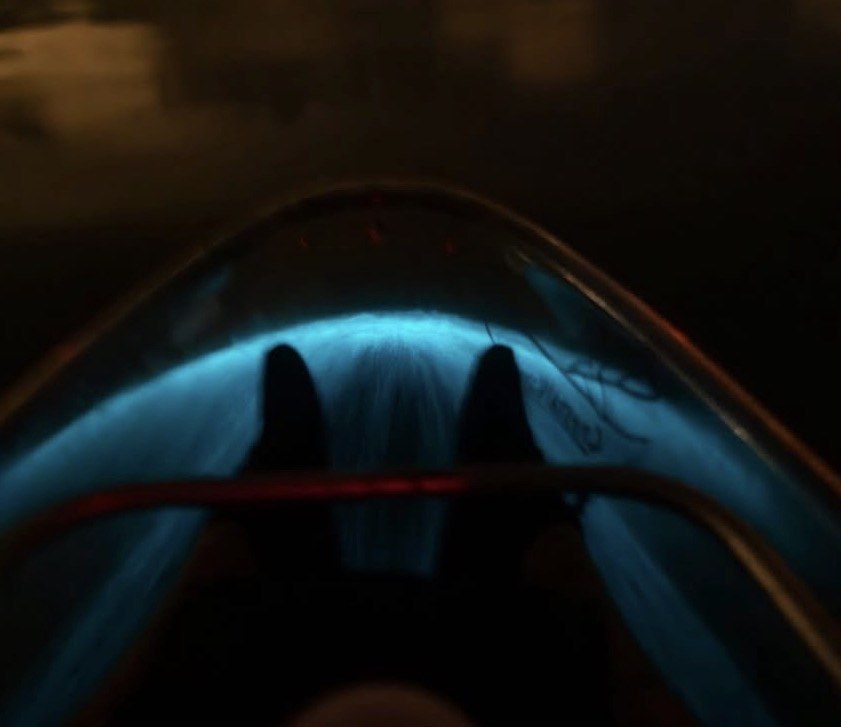
Staying in Esperanza on your first night and wanting the full stretch of water time, book the two-hour paddle. Take the shorter clear-hull trip if you would rather be back earlier, or want the light coming up through the floor between your knees. If nobody in your party wants to paddle, the seated pontoon handles it in 40 minutes.
Food after a late slot is a real constraint. Lazy Jack's runs every day of the year from 11:00 am to midnight with the kitchen going until 11 pm, which makes it the dependable option after a 9:00 pm departure, while Duffy's at 140 Calle Flamboyan serves Tuesday to Saturday from 12 to 8 and will be shut by the time you are back.
- Bioluminescent Bay Kayak Trip from Vieques: the longest stretch on the water at 2 hours, from $65, 4.5 from 1243 reviews, the fare covering the shuttle from the Esperanza meeting point out to the Bio Bay entrance plus paddle, life jacket and guide.
- Vieques island Biobay Kayaking Tour: 1.5 hours, from $60, rated 4.8 from 491 reviews, clear kayaks, a guide briefing in Spanish and English, meeting 25 minutes before the tour time.
- Bioluminescent Boat Tour in Mosquito Bay: 40 minutes, from $85, rated 4.4 from 262 reviews, seated on a 24-foot pontoon, with a $3.00 Department of Natural Resources fee collected separately in cash.
- Vieques Bio Bay Tour and Beach Day Trip from San Juan by Ferry: one 11-hour block from $230, 4.6 from 226 reviews, with the ferry both ways, the transfers on the island and a clear-bottom kayak paddle all handled for you. It is a long day.
Questions people ask
Can first-time paddlers do this at night?
Yes. The kayaks are tandems, the briefing on land covers paddle basics, and the guide leads a group capped at ten people on a trip of about an hour and a half. If someone in the party would rather not paddle at all, the 40-minute pontoon tour from $85 keeps everyone seated, with pickup in front of the Sun Bay entrance.
Is the glow guaranteed on the night I book?
No, and nobody on the island can promise it. The figures published on 9 October 2026 showed effectively zero bioluminescence for the final week of September 2026, the end of a decline that started in July 2026. The counts are taken weekly by the co-managing trust's biologist, so check their status before buying non-refundable travel and keep your tour on a date you can cancel 24 hours ahead.
Why is DEET repellent banned on the tours?
DEET is lethal to the dinoflagellates behind the glow, which is why operators keep it off the boat, and sunscreen and lotion come with limits for the same reason. Bring a DEET free spray instead. The reason to carry something at all: CDC puts dengue transmission in Puerto Rico in the frequent category, mainly through Aedes aegypti, peaking seasonally between July and November, with major outbreaks every 3 to 7 years.
Can I see the bioluminescence from land instead?
The glow is seen from the water, after dark, with a licensed concessionaire. There is an observation platform above the lagoon, reached by a moderate 2.5-mile trail that the U.S. Fish and Wildlife Service maintains from the refuge entrance parking lot, but it serves as daytime orientation, and the refuge gates shut at 7:30 pm between March 1 and August 31 and at 6:30 pm between September 1 and February 28.
What should I leave behind at my lodging?
Large bags, camera gear and anything you cannot afford to soak. Groups are small and the boats have no storage, so take a towel, DEET free spray and water shoes, flip flops or sandals, and wear clothes you do not mind getting wet. Swimming is prohibited by DRNA in any case, so you will not be changing into anything.
Read also