In shortYes, with the usual caveats. Mosquito Bay is a shallow lagoon rimmed with mangrove and sheltered from open-sea swell, and entry is only with a licensed concessionaire working under a certification program coordinated with DRNA. Groups do not exceed ten people, trips run about an hour and a half, life jackets are included, swimming is prohibited, and extreme weather means the trip is cancelled and refunded.
10maximum group size
1.5 htypical time out
Class SADRNA water category
24 hfull-refund cancellation window
Is Mosquito Bay safe for a first paddle after dark?
The water inside the bay is shallow, fringed with mangrove and closed off from open-sea swell, so there is no surf to launch through and nothing dragging you offshore. Nobody goes in unaccompanied: a licensed concessionaire has to lead the trip, and the people guiding it work under a conservation certification program coordinated with DRNA. Since jet skis and motorboats are not allowed to carry tourists inside the bay, there is no engine traffic to keep an eye on while you sit low on dark water.
Mosquito Bay kayak safety comes down to the things the operator controls. Groups do not exceed ten people and a trip lasts about an hour and a half, so the guide stays with the whole group rather than counting heads across a crowd. A life jacket is part of every tour listed on this site, and on the kayak trip the paddle comes with it.
DRNA bans swimming outright, partly so repellent and sunscreen stay out of the lagoon, and the operator is not allowed to let a guest over the side. For beginners that removes the thing most people are actually nervous about: you stay in the boat from launch to return, with no entry into the water at any point.
The reassuring first-timer choice
Clear kayaks, life jackets, a guide who briefs in Spanish and English and the drive to the water included, 1.5 hours from $60 and the highest-rated trip here at 4.8 from 491 reviews.
★ 4.8/5 · 491 reviews
Are there sharks in Mosquito Bay, Vieques?
Nothing in the official record for Puerto Mosquito concerns sharks. The documentation covers water quality, mangrove loss at the mouth of the bay and the weekly dinoflagellate counts. What is documented about the place itself is its shape: a shallow, nearly enclosed lagoon behind a mangrove rim, which is also why the organisms stay concentrated inside it rather than washing out to sea.
The marine-life listings people find online usually belong to somewhere else on the island. The official tourism body describes Rompeolas, Mosquito Pier on the north coast, as having swimming, snorkelling, diving and surfing areas with abundant marine life, corals and reefs. That is open coast, a daytime place, and a different body of water from the lagoon you paddle at night.
In the lagoon, the things you actually meet are mangrove roots in the dark, warm still water and insects.
Age, pregnancy and health limits operators publish
Participation rules are set by each operator and they are published, so read them before you pay rather than at the launch. As general context, one licensed Vieques operator lists the limits below; they belong to that company, not to the tours on this site, so ask your own operator to confirm its own policy when you book.
- No children under 4 years old
- Pregnancy from the sixth month onwards is excluded
- People with epilepsy excluded
- People with back or heart problems excluded
- People who suffer from dizziness excluded
- People who have had recent surgery excluded
- For comparison, a separate licensed operator publishes $70 per adult 12 and over, $50 per child aged 4 to 11 and no charge for infants aged 0 to 3, so very young children are accepted there
The access track and the unlit launch
The genuine hazards of the night are on land. The access road leading off Route 997 is unsurfaced, and its runoff is a recognised threat to the bay: EPA funded a two-year project worth $74,999 with the Vieques Conservation & Historical Trust, DRNA and USGS specifically to keep road sediment out of the water. Driving it after dark, in a rental you picked up that afternoon, is the part worth avoiding. Neither of the tours listed here hands you that drive, since the transfer from the meeting point to the water and back is part of what you pay for.
The launch itself has no lighting and the ground is uneven, which is the reason the kit list reads the way it does: a towel, DEET-free bug spray, and sandals, flip flops or water shoes. Repellent containing DEET is banned on tours because it kills the dinoflagellates that make the bay glow, so buy a DEET-free spray before the night and put it on at your lodging.
Going unprotected is not the answer either. CDC puts dengue transmission in Puerto Rico in the frequent category: Aedes aegypti does most of the transmitting, the seasonal peak falls between July and November, and the island sees a major outbreak every 3 to 7 years.
Weather, water quality and the state of the glow
Operators pull the trip and refund it when they judge conditions extreme or dangerous, so nobody is paddling out into bad weather to protect a booking. On top of that, the tours listed here refund in full when cancelled at least 24 hours before the scheduled departure time, so a forecast that turns ugly the day before is covered. Book the bay for an early night of your stay, not the last one, and you keep room to move the date.
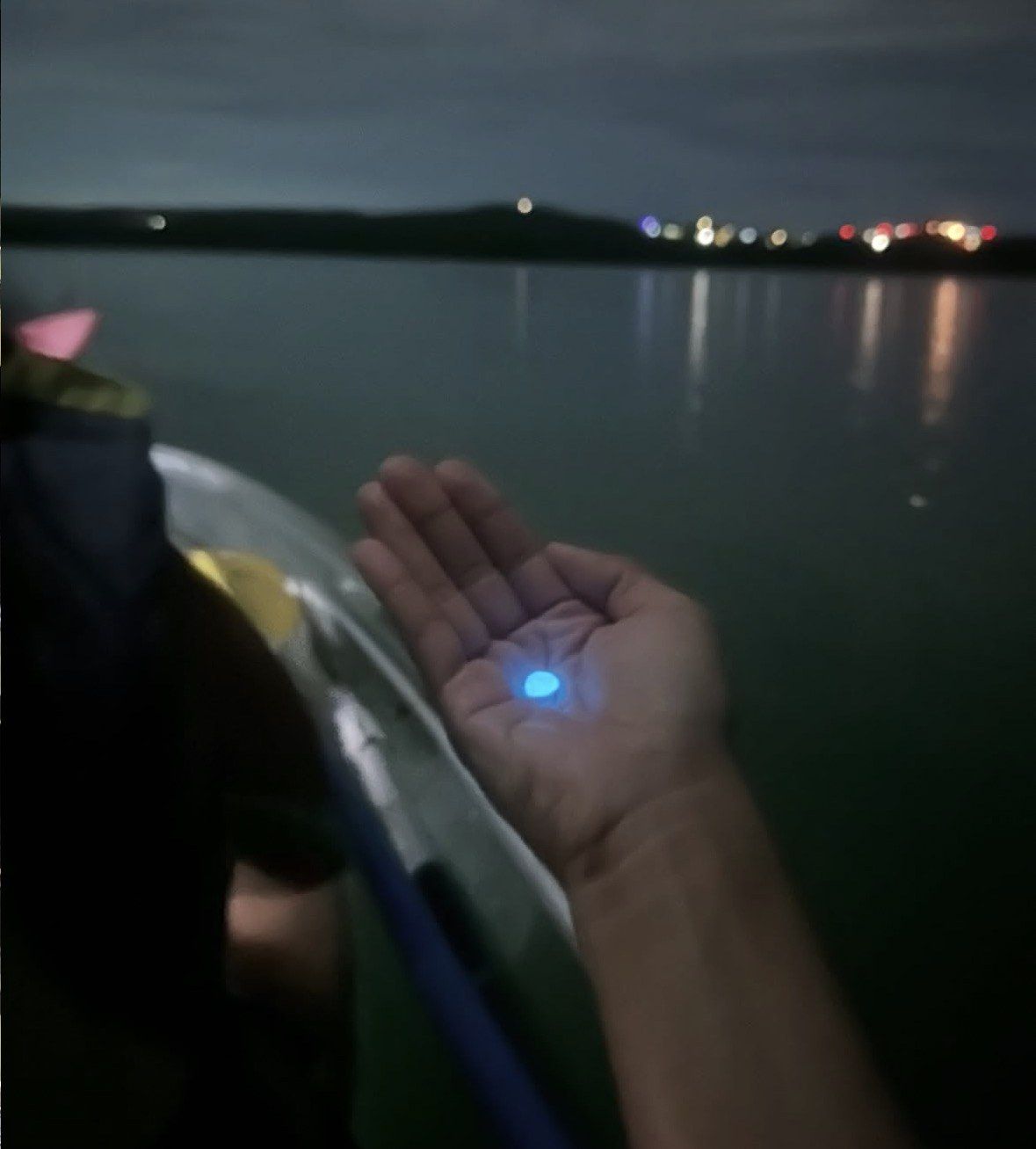
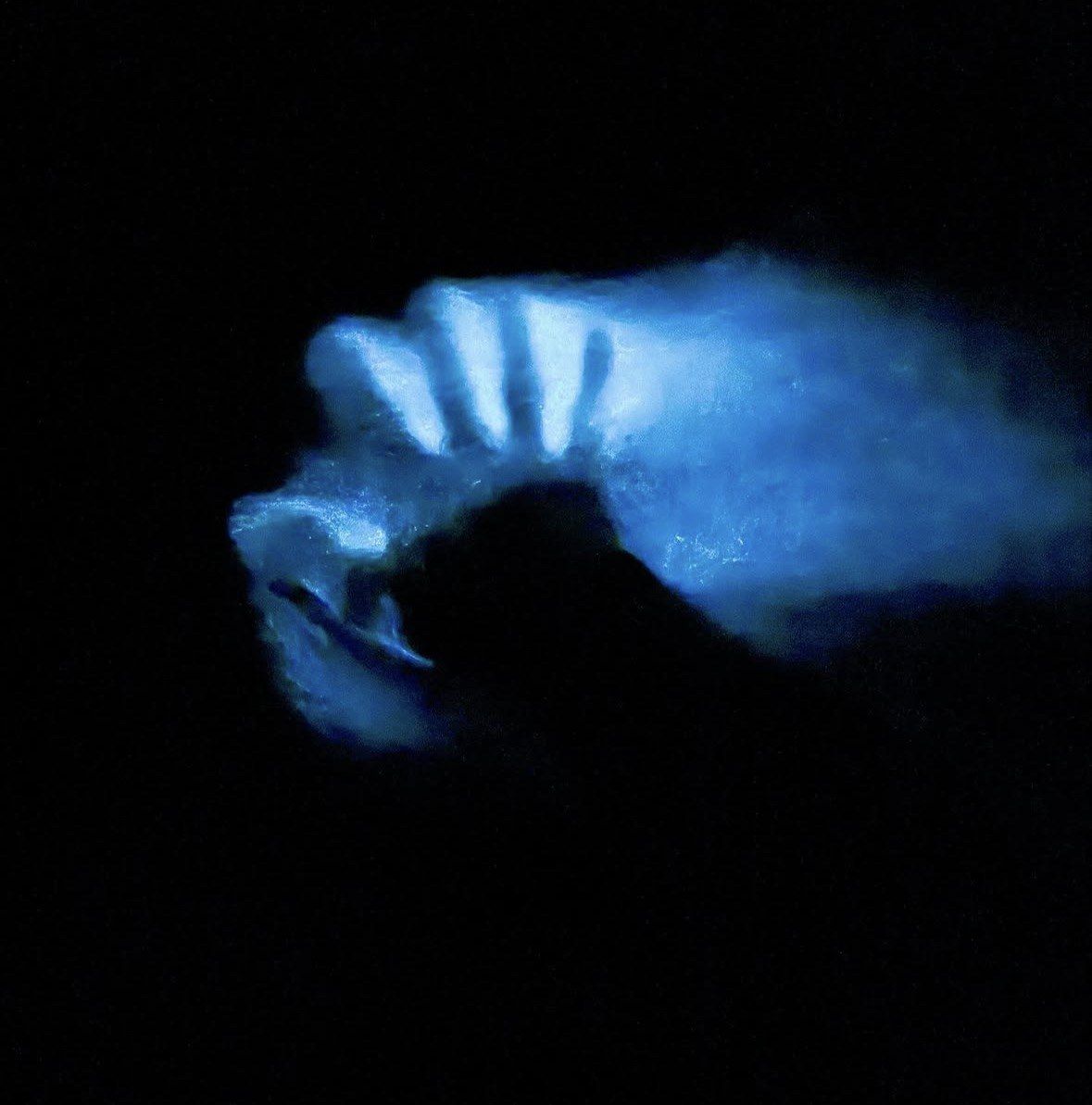
The water itself has a paper trail worth knowing about: EPA records Mosquito Bay as the only pristine bioluminescent bay in Puerto Rico, and DRNA grades it Class SA, the agency's highest category for ecological and recreational value. The reserve is managed by DRNA and co-managed by the Vieques Conservation & Historical Trust, whose biologist counts the glowing dinoflagellate, Pyrodinium bahamense var. bahamense, every week.
Honesty about the light matters more than reassurance here. The readings reported on 9 October 2026 had the bay glowing at effectively nothing across the final week of September 2026, the bottom of a slide that began in July 2026 and the third blackout logged this century, with DRNA technical staff still working through the numbers. The bay came back after the 2014 episode and after Hurricane Maria in 2017, when the organisms were missing for around seven months, and operators keep running nightly departures, so treat a glowing bay as the upside and hold a booking you can still cancel.
Paddle, or stay seated on the pontoon
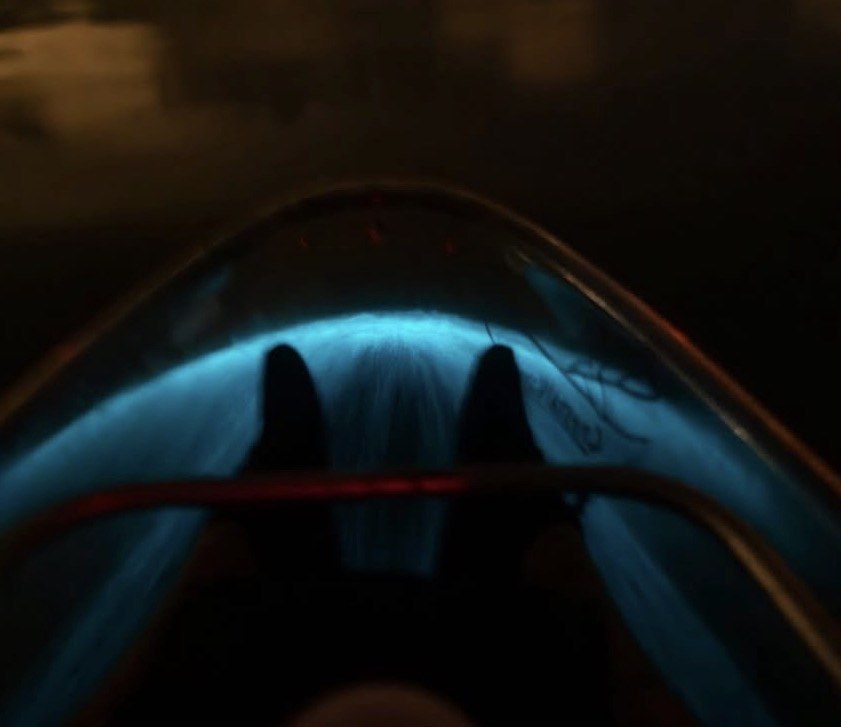
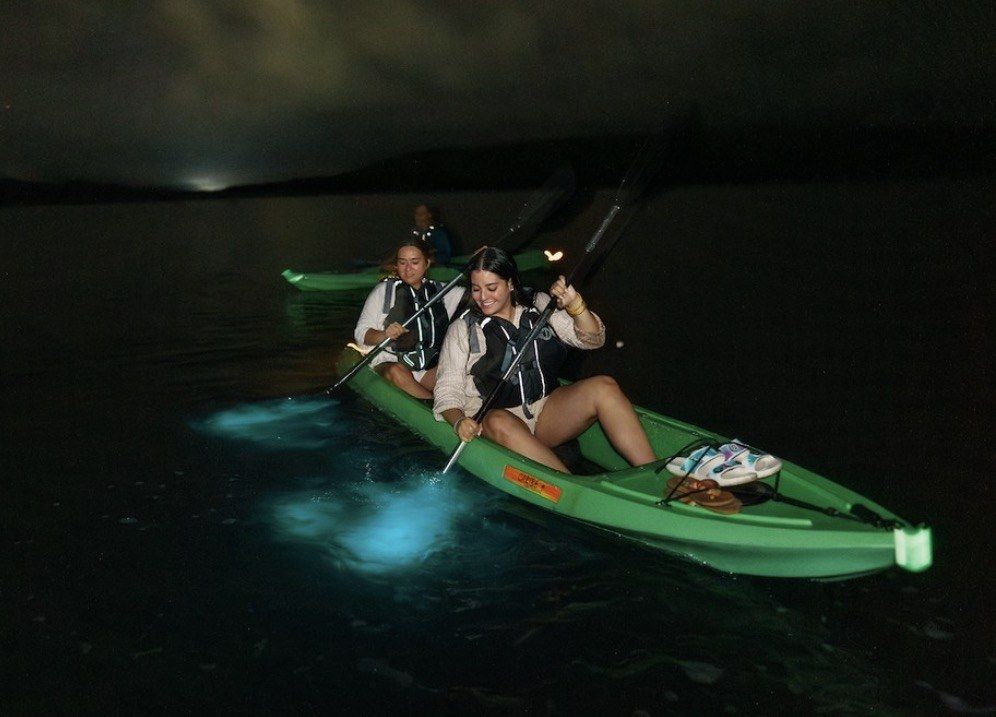
Take the kayak as the default. It is the permitted norm on the bay, the licensed concessionaires mostly run kayaks, and the movement of the paddle beside you is what sets the organisms flashing. Choose the pontoon instead if someone in the party cannot paddle, cannot get wet, or simply does not want to be in a small boat on dark water. Both options listed here collect you near the Sun Bay entrance on Route 997 and drive you to the water, so you never have to find the track on your own.
On the kayak trip the meeting time is always 25 minutes before the tour time, which means a 7:00 pm departure is a 6:35 pm meeting. On the pontoon, remember the $3.00 cash fee for the Department of Natural Resources, collected separately from the fare.
| Tour | Price | Time on the water | Who it suits |
|---|
| Vieques island Biobay Kayaking Tour | from $60 | 1.5 hours | Clear-hulled kayaks with paddles and life jackets, a briefing in either Spanish or English, the transfer from the meeting point to the bay and back, 4.8 ★ across 491 reviews |
|---|
| Bioluminescent Boat Tour in Mosquito Bay | from $85 | 40 minutes | No paddling, seated on a 24-foot pontoon with emergency life jackets, pickup in an air-conditioned vehicle in front of the Sun Bay entrance, $3.00 cash fee for the Department of Natural Resources not included, rated 4.4 ★ from 262 reviews |
|---|
Questions people ask
Do I need to be able to swim?
DRNA bans swimming in the bay and operators cannot let anyone into the water, so the whole trip happens from the boat. Life jackets are included on both tours listed here. No swimming-ability requirement is published for them, so if it matters to anyone in your group, ask the operator before you book.
Can I just drive down and see the bay by myself?
No. The bay cannot be entered unaccompanied; a licensed concessionaire has to lead the visit, and kayaks are what most of them use. Jet skis and motorboats are also ruled out for tourist trips inside the bay.
Is the water clean enough to be out on at night?
On paper the water is in good shape: EPA lists it as Puerto Rico's only pristine bioluminescent bay, and DRNA's Class SA grading is the top band for ecological and recreational value. The ban on swimming, DEET and most sunscreen or lotion exists to keep it that way. The reserve is monitored by DRNA with the Vieques Conservation & Historical Trust, which does the water-quality work and the weekly counts.
What happens after the tour, with no transport off the island?
Budget for a night on Vieques. The evening departures are sold on condition of an overnight, and operators state that nothing runs off the island after most of them. They name one exception, a 6:00 pm slot in high season that in their words leaves enough margin for the 9:30 pm ferry, and that figure comes from the operator rather than a published timetable. Lazy Jack's in Esperanza is open every day from 11:00 am to midnight, kitchen until 11 pm, if you want food afterwards.
Will the bay definitely glow on my night?
No one can promise that. On 9 October 2026 the bay was reported glowing at effectively zero through the last week of September 2026, the bottom of a decline that started in July 2026 and the third blackout on record this century. Previous episodes ended in recovery, including a gap of roughly seven months after Hurricane Maria in 2017. Ask where the weekly counts stand before you lock in travel, and hold a booking that still refunds in full 24 hours before departure.
Read also