Where the name Puerto Mosquito comes from
Mosquito Bay sits on the south shore of Vieques, an island with no road link to mainland Puerto Rico, and the early written record is thin. Tradition on the island holds that the bay is named after the Mosquito, a ship sailed by the Puerto Rican pirate Roberto Cofresi. The story gets repeated all over Vieques, but no primary source confirms it, so treat it as legend rather than documented history. The geography is not in question: a narrow mouth, a shallow basin ringed by mangrove, and very little exchange with the open sea.
Formal recognition came in 1980, when Puerto Mosquito was proclaimed a U.S. National Natural Landmark. The federal citation goes further than most: it calls this the best example of a bioluminescent bay in the United States. Ownership is recorded as territorial, held by Puerto Rico's Department of Natural and Environmental Resources (DRNA), which manages the reserve and writes the rules you get briefed on before you sit in a kayak. The U.S. Fish and Wildlife Service uses the same name, Puerto Mosquito National Natural Landmark, and keeps a 2.5-mile moderate trail from the refuge entrance parking lot to an observation platform above the bay. That trail is a daytime walk; the glow is seen from the water at night, with a licensed concessionaire.
What makes the water light up
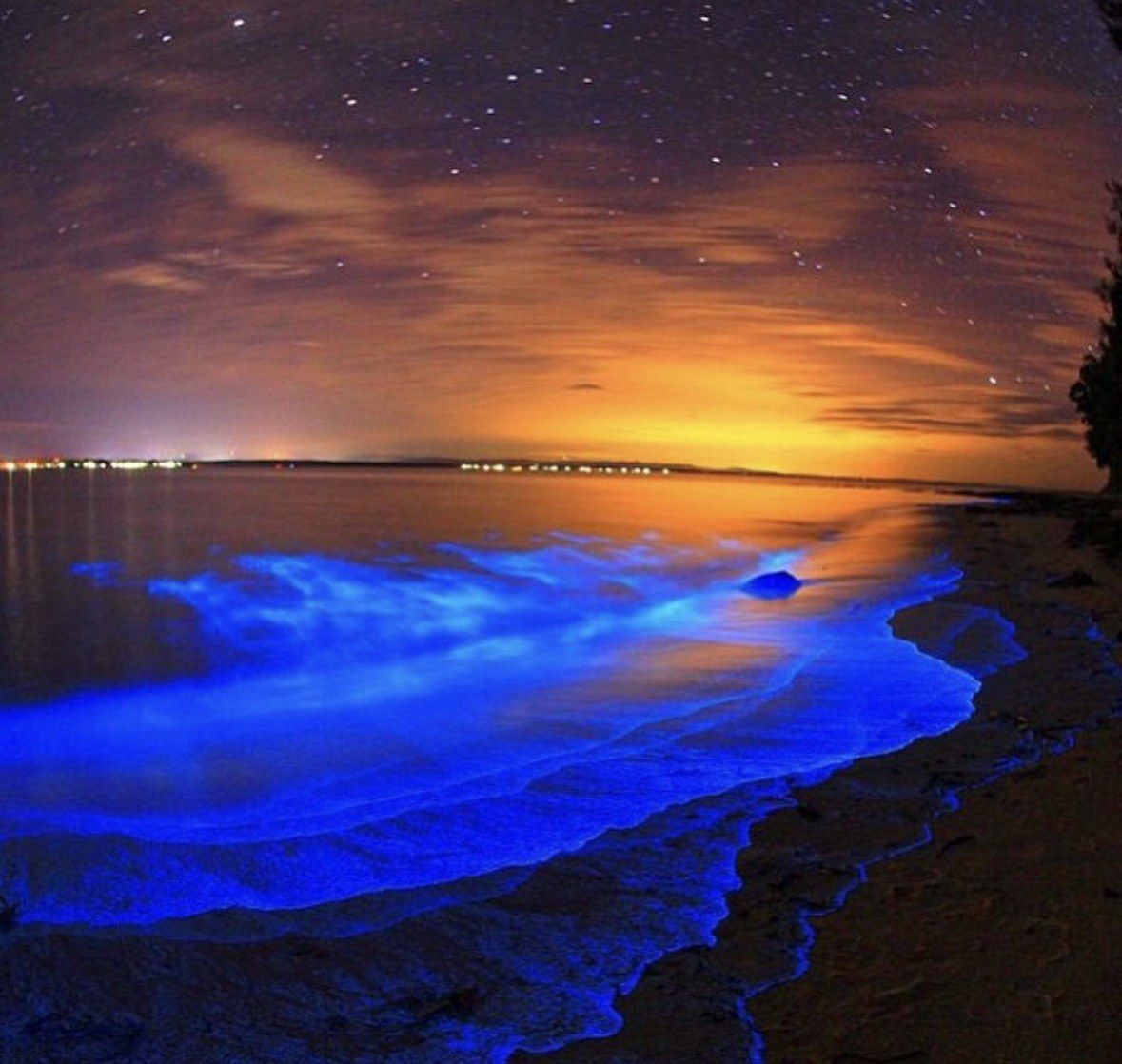
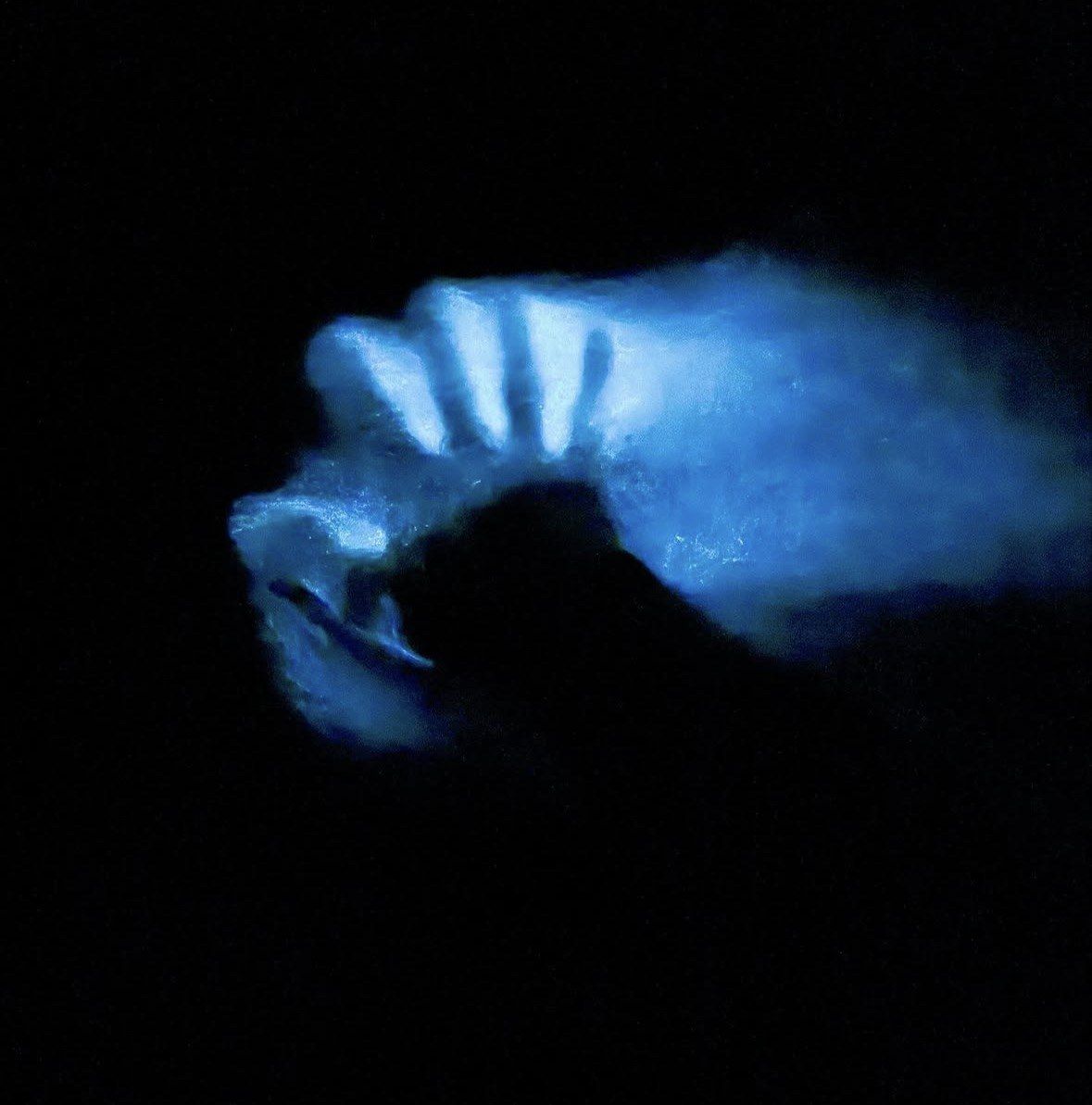
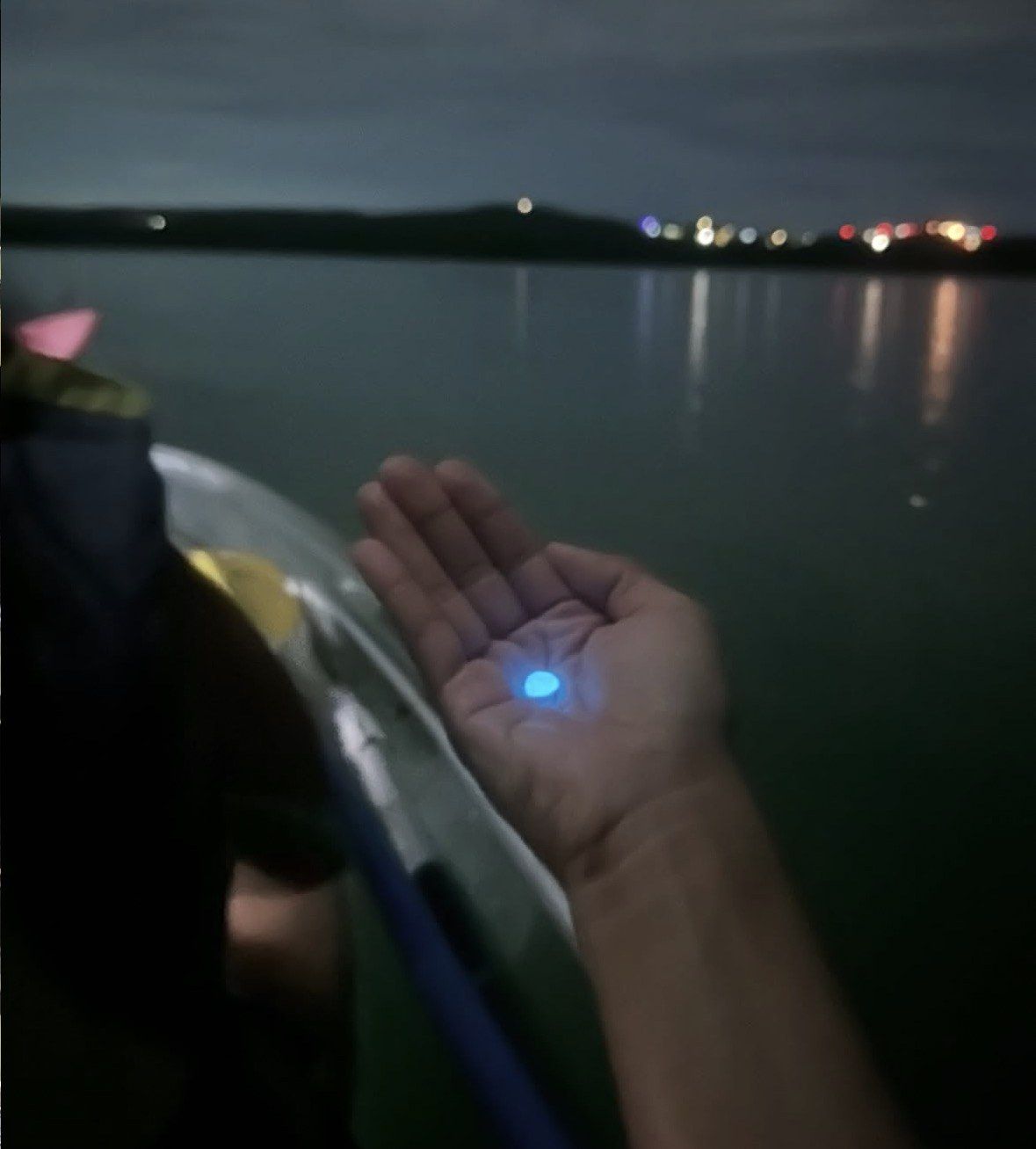
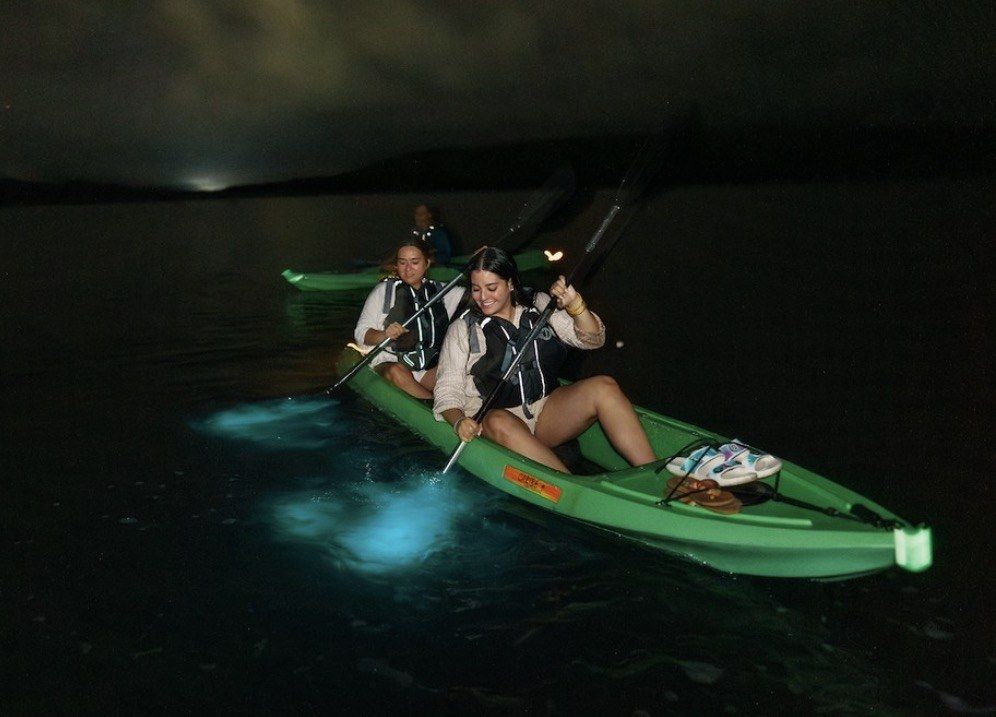
The light comes from one dinoflagellate, Pyrodinium bahamense var. bahamense, a microscopic plankton that flashes when the water around it is disturbed. A paddle stroke does it. So does the hull sliding forward, and the cells fire in the turbulence beside your hands. Density decides a night, which is why the biologist at the Vieques Conservation & Historical Trust counts cells every week. Those counts also serve as the reserve's early-warning system: when the numbers slide, the trust and DRNA know long before any visitor does.
Guinness World Records recognised Mosquito Bay in 2006 as the brightest bioluminescent bay, citing up to 700,000 dinoflagellates per gallon of water. The EPA calls it the only pristine bioluminescent bay in Puerto Rico and notes that DRNA classifies the water as Class SA, the highest category for ecological and recreational value. The Vieques Conservation & Historical Trust, which co-manages the reserve and has served the island for 40 years, describes Puerto Mosquito as the brightest and most pristine bio bay in the world. Each of those labels has consequences on the water: the restrictions here are tighter than anywhere else on Vieques.
Those protections shape how a visit works. You cannot reach the bay on your own, since entry is only with a licensed concessionaire, most of whom run kayaks, and tourist trips by jet ski or motorboat are not allowed inside the bay. Swimming is prohibited by DRNA, partly to keep repellents and sunscreens out of the water, and operators cannot let guests get in. DEET-based repellent is banned because it kills the dinoflagellates, so bring DEET-free spray instead. Groups do not exceed ten people and a trip lasts about an hour and a half. No company may operate on the night before, the night of, or the night after each full moon.
Mosquito Bay by the numbers
1980
Proclaimed a U.S. National Natural Landmark
2006
Guinness World Records recognition as the brightest bioluminescent bay
700,000
Dinoflagellates per gallon of water in the Guinness citation
200,000
Visitors a year, as reported by the co-managing trust
15 to 30 years
Estimated natural recovery of mangrove lost to Hurricane Maria
$74,999
EPA-funded project to keep access-road runoff out of the bay
What 200,000 visitors a year mean for the bay
More than 200,000 visitors reach the bay each year, according to the trust that co-manages the reserve with DRNA. That is heavy traffic for a shallow, enclosed basin, and the response has been to channel it rather than cut it off. Guides and operators working on Mosquito Bay are covered by a conservation certification program coordinated with DRNA, so the person taking you out should be a certified concessionaire. Trips stay small and short, which holds down noise and movement on the water. The kayak meeting points sit a few minutes away in Esperanza, on Calle Flamboyan.
Sediment is the quieter problem. Runoff from the access road carries soil into the water, and the EPA treats that as a recognised threat, funding a $74,999 two-year project with the Vieques Conservation & Historical Trust, DRNA and the U.S. Geological Survey to keep road runoff out of the bay. The trust also handles erosion control, water-quality monitoring and the dinoflagellate counts. None of that work is visible from a kayak after dark, which is part of why the condition of the bay can change with nothing a visitor would notice.
Hurricane Maria, in 2017, did the structural damage. Almost all the mangrove at the bay's mouth died, and scientists estimated that natural recovery could take 15 to 30 years, which matters because that mangrove feeds and shelters the system producing the light. The organisms themselves were absent for roughly seven months after the storm, then the bay recovered. There had already been an episode in 2014, and the bay came back from that one too. Local scientists weigh both recoveries when they assess a blackout, without treating the next one as certain.
The bay in October 2026
As of 9 October 2026 the bay was not glowing. Readings had been sliding since July 2026 and fell to effectively zero in the last week of September, which makes this the third blackout of the bay this century. DRNA secretary Waldemar Quiles said technical staff have been evaluating the drop in readings since July and called it a matter of great importance to the agency. The trust's weekly counts continue in the meantime. Tourism on Vieques has carried on through it: the mayor said visitors still come even without the bay glowing, and expected improvement by November.
Operators are still running nightly departures, and their framing is straightforward: the glow is visible year round, but conditions vary because the ecosystem is dynamic. Plan around that. Check the current status of the bay before you commit to non-refundable travel, aim for nights close to a new moon (10 October 2026, 9 November 2026, 8 December 2026 and 7 January 2027), and take a later slot for a darker sky. Book a night on Vieques as well, because there is no transport off the island after most tours. The tours on this site allow a full refund if cancelled at least 24 hours before the scheduled departure time, and the operator cancels and refunds the trip if weather is judged extreme or dangerous.