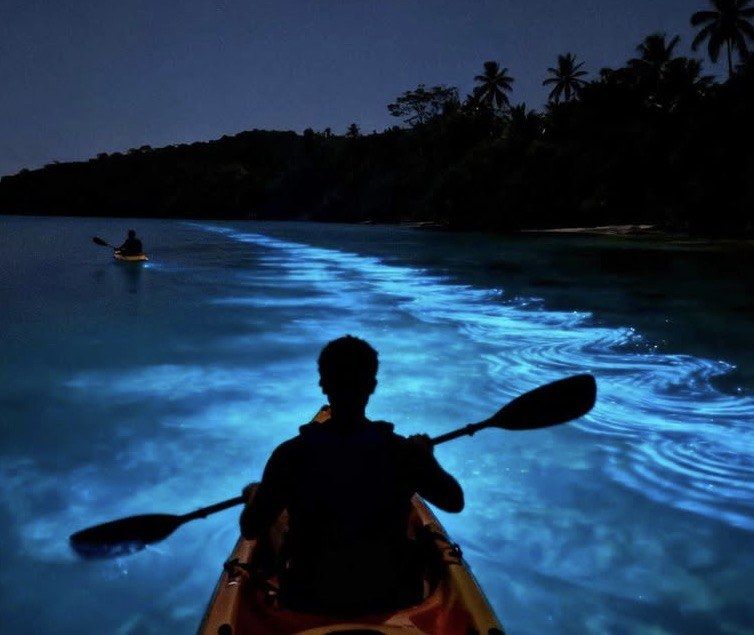
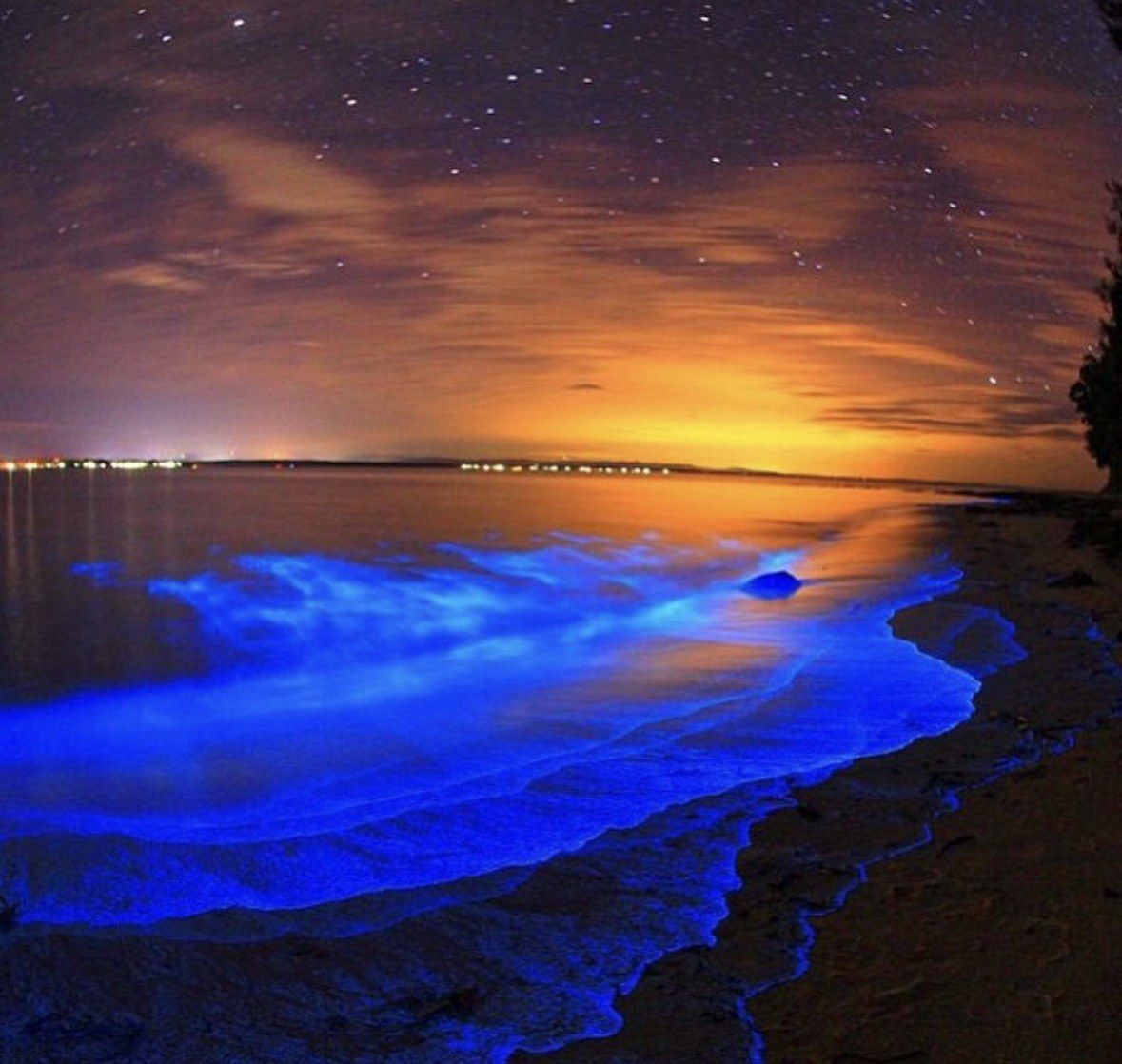
In shortThe protection here is layered: a federal National Natural Landmark proclamation from 1980 sits on top of territorial ownership by DRNA, and the agency runs the reserve jointly with the Vieques Conservation & Historical Trust. The wording of the landmark citation is why the site carries that weight at federal level: no other bioluminescent bay in the United States is rated a better example. For visitors that means you go in only with a certified concessionaire, swimming is prohibited, jet skis and motorboats are barred from tourist trips inside the bay, and DEET repellent cannot be used on tours.
1980Landmark proclamation
Class SADRNA water classification
$74,999EPA runoff project
200,000+Visitors each year
What the Mosquito Bay National Natural Landmark designation covers
The listing dates from 1980, when Puerto Mosquito was proclaimed a U.S. National Natural Landmark. The citation behind it is unusually blunt for a federal document: it names Puerto Mosquito the best example of a bioluminescent bay in the United States. The U.S. Fish and Wildlife Service uses that same official title, Puerto Mosquito National Natural Landmark, for the site.
Ownership sits with the territory. The landmark is recorded as territorially owned by the Puerto Rico Department of Natural and Environmental Resources, the agency usually written as DRNA. That matters on the night itself, because the restrictions a guide recites to you before you get in a kayak come from the agency and apply to every company working the bay.
Who manages Mosquito Bay day to day
DRNA manages the natural reserve and the Vieques Conservation & Historical Trust co-manages it, a split confirmed both by the trust and by local press, which refers to the trust by its Spanish name, Fideicomiso de Conservación e Historia de la Isla Nena. On the trust's side, that co-management role comes after 40 years of work on the island.
The practical work is the trust's: erosion control at the bay, water-quality monitoring, and the dinoflagellate counts. What gets counted is a single species, Pyrodinium bahamense var. bahamense, the organism responsible for the light, and the trust's biologist runs that count weekly. The trust puts annual visitor numbers at more than 200,000 and describes Puerto Mosquito as the brightest and most pristine bio bay in the world.
Its office is at 138 Calle Flamboyán on the Esperanza malecón, open Monday to Friday from 8 am to 4 pm, so it is a weekday-daytime stop rather than somewhere to call in before a 9:00 pm departure.
Class SA water and the sediment coming off the access road
EPA calls Mosquito Bay the only pristine bioluminescent bay in Puerto Rico and records that DRNA classifies its water as Class SA, the highest category for ecological and recreational value. The 2006 Guinness World Records entry for the brightest bioluminescent bay rests on the same water: the record cites a density of up to 700,000 dinoflagellates per gallon.
Keeping that classification is mostly a fight against dirt. Sediment and runoff from the bay's access road is a recognised threat, and EPA funded a two-year project worth $74,999 with the trust, DRNA and USGS aimed at keeping road runoff out of the water. There is a second, slower problem at the mouth of the bay: Hurricane María killed off almost all the mangroves there, and scientists assessing the damage put natural recovery at 15 to 30 years.
The rules that apply to your night on the water
Access is the rule to absorb first: you cannot go to the bay on your own. Every trip on the bay is led by a licensed concessionaire, and kayaks are what the majority of them put on the water. The permit framework allows paddling and excludes jet skis and motorboats from tourist trips inside the bay.
Nothing goes into the water, including you. DRNA's swimming ban exists partly to keep repellent and sunscreen residue out of the bay, and the prohibition binds the companies too: no operator may let a guest enter the water. Repellent containing DEET kills the organisms that produce the glow, which is why it is barred from tours; carry a DEET-free product instead and go light on sunscreen and lotion, both of which are restricted.
On the repellent question, CDC reports that dengue transmission in Puerto Rico is frequent and spread mainly by Aedes aegypti mosquitoes, with the seasonal peak running July through November and major outbreaks recurring every 3 to 7 years; in the 2024 outbreak case counts climbed sharply in May as the wet season set in. Spray the DEET-free product at your lodging before you walk to the meeting point.
| Rule | What it means for you |
|---|
| Access only with a licensed concessionaire | No independent visits; book a trip, and most run kayaks |
|---|
| Jet skis and motorboats barred from tourist trips | Kayaking is the permitted way in |
|---|
| Swimming prohibited by DRNA | You stay in the kayak; the operator cannot let you get in |
|---|
| DEET banned, sunscreen and lotion restricted | Pack DEET-free bug spray, a towel and sandals, flip flops or water shoes |
|---|
| Three closed nights each lunar month | No company may operate the night before, the night of or the night after a full moon |
|---|
| Small groups | Parties do not exceed ten people and a trip runs about an hour and a half |
|---|
The two-hour certified kayak trip
It is the straightforward way to comply with every rule on this page: a licensed concessionaire, a kayak, transport out to the Bio Bay entrance and back, and a full refund if you cancel 24 hours ahead.
★ 4.5/5 · 1,243 reviews
Book with a certified operator, and check the certification
Guides and tour companies working the bay are covered by a conservation certification programme coordinated with DRNA, which is why the word licensed keeps appearing on operator pages. Ask directly whether your guide is a certified concessionaire before you pay, and treat any offer to take you in outside that framework as a reason to walk away.
Two trips on this site fit most readers. Pick the Bioluminescent Bay Kayak Trip from Vieques for the full two hours: from $65, rated 4.5 across 1243 reviews, with the ride from the Calle Flamboyán meeting point in Esperanza out to the Bio Bay entrance, a paddle, a life jacket and a guide all inside the price. An overnight on Vieques is required, and you reach the island by ferry from Ceiba or by plane from San Juan or Ceiba.
Cutting the night shorter, the Vieques island Biobay Kayaking Tour runs 1.5 hours from $60 and carries the strongest score listed on this page, 4.8 from 491 reviews, with clear kayaks, life jackets, a guide working in Spanish or English, and the transfer from the meeting point to the bay and back. Meeting is across from the Sun Bay beach entrance, 25 minutes ahead of the departure you booked: 6:35 pm for a 7:00 pm tour. Cancellation on either trip returns the whole payment provided you do it 24 hours or more ahead of the scheduled departure time.
- Staying on the Esperanza malecón and want the longest paddle: the 2-hour trip from $65
- Want clear hulls, a shorter night and the best rating here: the 1.5-hour trip from $60
- Either way, pick a date that is not one of the three nights around a full moon, and have the operator confirm which nights those are
Where the bay stands as of October 2026
The protection framework has not stopped the current problem. As reported on 9 October 2026, readings had dropped to effectively zero during the last week of September 2026, the floor of a decline under way since July 2026 and the third blackout on record at the bay this century. Technical staff have been working through those readings since July, according to DRNA secretary Waldemar Quiles, who described the situation as a matter of great importance to the agency. No cause has been named.
The bay has come back from this twice: once after the 2014 episode, and once after Hurricane María in 2017, a gap of roughly seven months with no organisms present. Tourism on the island has carried on, with the mayor saying visitors still come without the bay glowing and expecting improvement by November, and operators still selling nightly departures. If the glow is the whole point of your trip, ask where the weekly counts stand before you buy anything you cannot cancel, and hold a tour with the 24-hour full-refund window intact. Weather judged extreme or dangerous by the operator means a cancellation with your money returned.
Questions people ask
Can I walk or drive down to Mosquito Bay by myself?
No. The reserve is closed to unaccompanied visits: a licensed concessionaire has to lead you in, and kayaks are what most of them use. There is a 2.5-mile moderate trail kept up by the Fish and Wildlife Service, running from the refuge entrance parking lot to an observation platform above the bay; treat it as a daytime hike across refuge land, because it will not show you the bioluminescence. The glow is seen from the water, at night, with a certified operator.
Can I buy a ticket or get information at the bay itself?
Mosquito Bay has neither. The closest official point for information is the Vieques National Wildlife Refuge Administrative Building & Visitor Center, sitting on refuge land that borders the bay, at Road 997, Km 3.2, Vieques, PR 00765; the telephone number is (305) 393-2142. Gate hours at the refuge run from 7:00 am to 7:30 pm between March 1 and August 31, then 7:00 am to 6:30 pm from September 1 to February 28, every day of the week. Arrange the trip itself with the operator in advance, before you travel to the bay.
Does the certification cover the company or the individual guide?
Both. Guides and tour operators on Mosquito Bay are covered by a conservation certification programme coordinated with DRNA. When you book, the question to ask is whether the company is a licensed concessionaire for the reserve and whether the person leading your group is certified under that programme.
Why are there closed nights every month?
Operators attribute it to DRNA: no tour company may run on the night before, the night of, or the night after each full moon, which removes roughly three nights from every lunar month. Operator advice is to target the nights around a new moon, with the least moonlight in the sky: 9 November 2026, then 8 December 2026, then 7 January 2027. Sources published for late 2026 give conflicting full-moon dates, so get the closed nights for your own week confirmed by the operator before booking.
If swimming is prohibited, where can I get in the water on Vieques?
Balneario Sun Bay on the south shore, reached from Route 997, operates Wednesday to Sunday and public holidays from 8:30 a.m. to 5:00 p.m., with beach access open 24 hours, lifeguards, toilets, parking, a cafeteria and picnic shelters; it charges by vehicle, $3 for cars and $2 for motorcycles. Just west of it, the Esperanza malecón beach is listed with a designated swimming area, snorkelling and diving, lifeguard cover and accessible provision for visitors with disabilities. Plan your swimming for the daytime beaches and stay in the kayak once you are on the bay.
Read also