Mosquito Bay Tour Options, Moon Dates and Bay Status
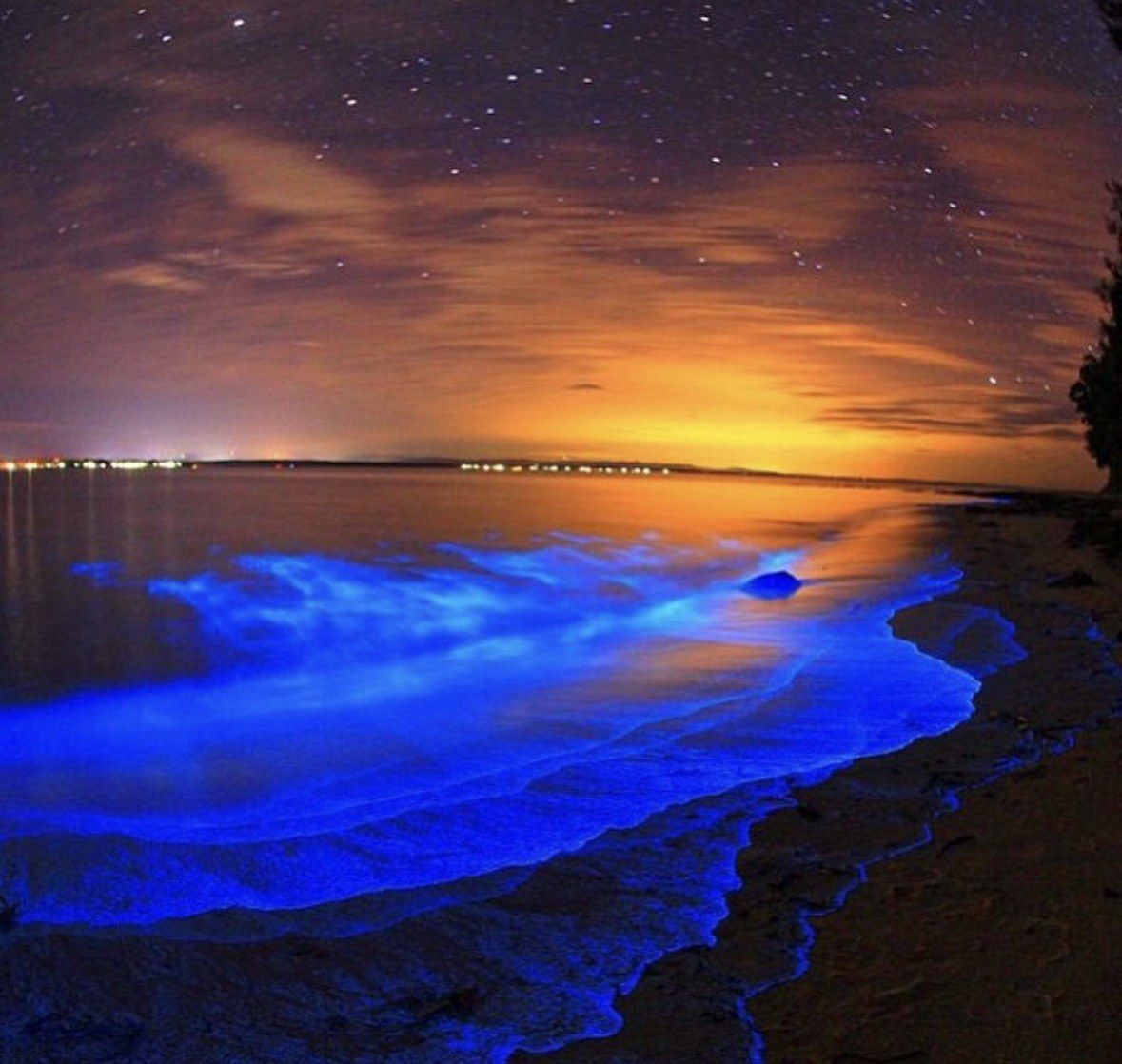
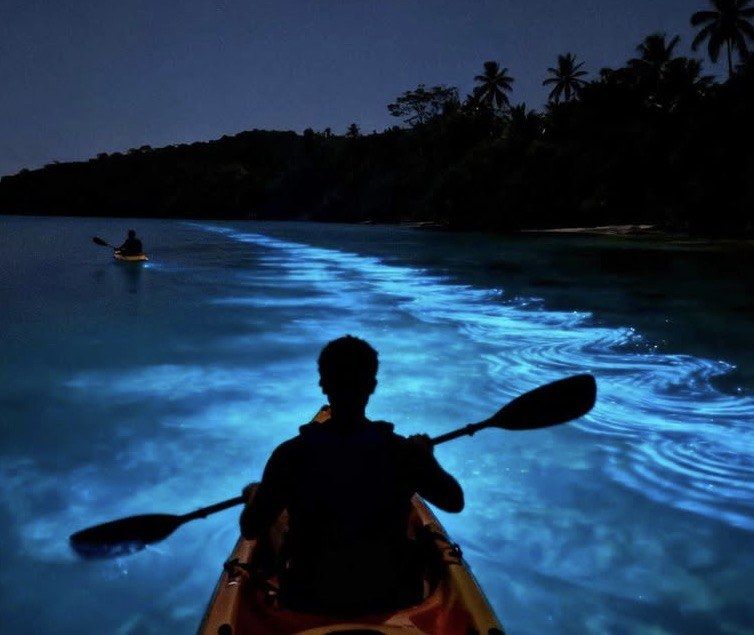
Mosquito Bay on Vieques is the brightest bioluminescent bay on record, and at night you can only go out on it with a licensed kayak or boat tour. As of 9 October 2026 the glow had dropped to near zero, so choose a tour you can cancel up to 24 hours ahead and check the bay before you travel.
DRNA manages this reserve, co-managed by the Vieques Conservation & Historical Trust, which does the water-quality monitoring and the dinoflagellate counts. You get on the water only with a licensed concessionaire, and almost all of them run kayaks.
Puerto Mosquito lies on the south shore of Vieques, reached from Route 997 past the Sun Bay entrance. There is no visitor centre at the water and no ticket office. Access is only with a licensed concessionaire, most of whom run kayaks, and tourist trips inside the bay are not allowed with jet skis or motorboats. The nearest official visitor point is the Vieques National Wildlife Refuge Administrative Building and Visitor Center at Road 997, Km 3.2, telephone (305) 393-2142. The kayak meeting points sit in Esperanza, on Calle Flamboyan, within walking distance of the boardwalk lodgings.
Puerto Mosquito was proclaimed a U.S. National Natural Landmark in 1980 and is recorded as territorially owned by Puerto Rico's Department of Natural and Environmental Resources, with the federal citation calling it the best example of a bioluminescent bay in the United States. Guinness World Records recognised it in 2006 as the brightest bioluminescent bay, citing up to 700,000 dinoflagellates per gallon. EPA describes it as the only pristine bioluminescent bay in Puerto Rico and notes that DRNA classifies the water as Class SA, the highest ecological and recreational category. Tradition ties the name to the Mosquito, a ship of the pirate Roberto Cofresi, though that is legend rather than documented history.
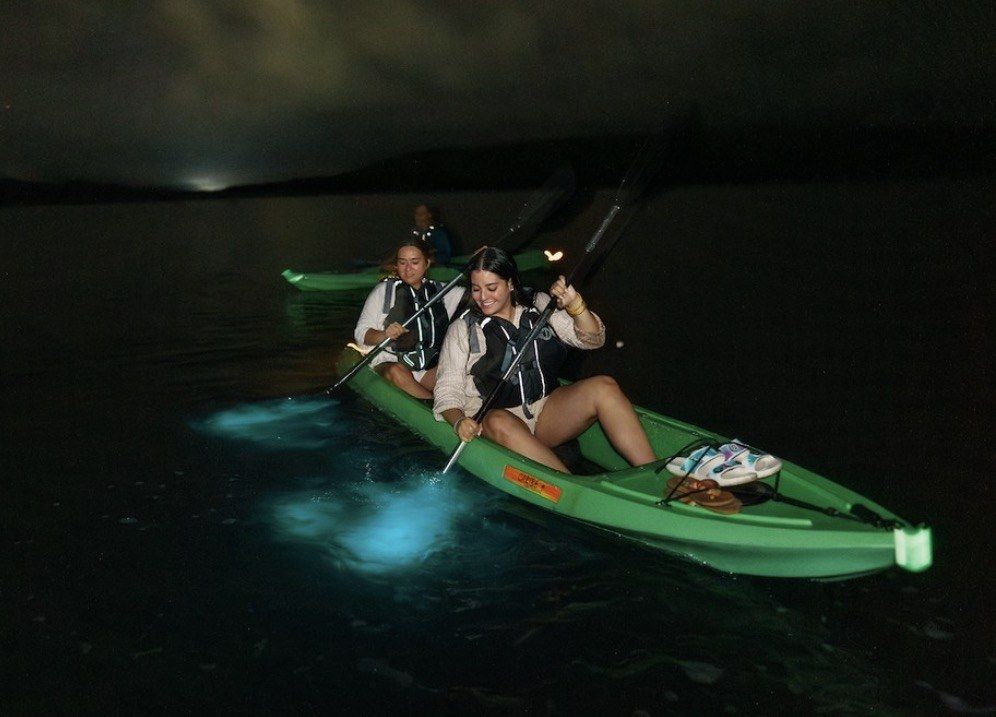
Tours are small and short. Groups do not exceed ten people and a trip lasts about an hour and a half, so there is no room for luggage and no reason to bring a bag you care about. Swimming is prohibited by DRNA, partly to limit contamination from repellents and sunscreens, and operators are not allowed to let guests enter the water. DEET-based repellent is banned on tours because it kills the organisms that make the water glow, so bring DEET-free bug spray, a towel and sandals, flip flops or water shoes. Plan on watching the water rather than photographing it.
Landmark statusNational Natural Landmark, 1980
Guinness recognitionBrightest bioluminescent bay, 2006
Group sizeNo more than ten people
Time on the waterAbout an hour and a half
Water classificationClass SA (DRNA)
Closed nightsNight before, of and after each full moon
1980
A federal landmark held by DRNA
Puerto Mosquito was proclaimed a U.S. National Natural Landmark in 1980 and is recorded as territorially owned by the Department of Natural and Environmental Resources. The federal citation calls it the best example of a bioluminescent bay in the United States.
700,000
The 2006 Guinness count
Guinness World Records recognised the bay in 2006 as the brightest bioluminescent bay, citing up to 700,000 dinoflagellates per gallon of water. The species responsible is Pyrodinium bahamense var. bahamense, counted weekly by the co-managing trust's biologist.
3rd
The blackout under investigation
As reported on 9 October 2026, bioluminescence had fallen to effectively zero in the last week of September 2026 after a gradual decline since July, described as the third blackout of the bay this century. DRNA secretary Waldemar Quiles said technical staff have been evaluating the drop in readings since July and called it a matter of great importance to the agency.
7 months
What happened last time
After Hurricane Maria in 2017 the bioluminescent organisms were absent for roughly seven months before the bay recovered, and it also recovered from the 2014 episode. Hurricane Maria caused almost total mangrove mortality at the mouth of the bay, with natural recovery estimated at 15 to 30 years.
$74,999
Keeping road sediment out
Sediment and runoff from the access road is a recognised threat. EPA funded a $74,999 two-year project with the Vieques Conservation & Historical Trust, DRNA and USGS to keep road runoff out of the water.
200,000+
Visitors and certified guides
More than 200,000 visitors a year, according to the trust that co-manages the reserve with DRNA and has served Vieques for 40 years. Guides and operators are covered by a conservation certification program coordinated with DRNA, so the person leading you should be a certified concessionaire.
The observation-platform trail, in daylight
A 2.5-mile moderate trail runs from the refuge entrance parking lot to an observation platform above the bay, maintained by the U.S. Fish and Wildlife Service. Walk it for orientation in daylight; the glow is seen from the water at night, with a licensed concessionaire, and never from a trail.
Sun Bay, before your departure time
Balneario Sun Bay operates Wednesday to Sunday and public holidays from 8:30 a.m. to 5:00 p.m., while beach access itself stays open 24 hours. Charges are by vehicle: $2 motorcycles, $3 cars, $4 mini-vans, $5 buses. Facilities include toilets, parking, a cafeteria, picnic shelters, lifeguards and a camping area.
The Esperanza malecon beach
Immediately west of Sun Bay, the malecon beach is listed with a swimming area, snorkelling and diving, lifeguards and accessible provision for visitors with disabilities. It sits on the same street as the kayak meeting points, which makes it the easy option on a tour day.
Rompeolas, also called Mosquito Pier
On the north coast, Rompeolas is listed with a swimming area, snorkelling and diving areas and a surfing area, with abundant marine life, corals and reefs. It is a different side of the island from the evening meeting points, so allow driving time.
Short refuge trails
Vieques National Wildlife Refuge covers about 17,771 acres, roughly 3,100 on the west side and 14,671 on the east, the largest national wildlife refuge in the Caribbean. Short walks include the 0.29-mile Puerto Ferro loop to the historic lighthouse, the 0.85-mile Tapon Trail to Caracas Beach, the 0.42-mile Playuela loop and the 0.89-mile Kiani Boardwalk.
The conservation trust in Esperanza
You will find the Vieques Conservation & Historical Trust at 138 Calle Flamboyan on the malecon, with office hours Monday to Friday, 8 am to 4 pm. This is the organisation that performs the erosion control, water-quality monitoring and weekly dinoflagellate counts that determine whether the bay is glowing at all.
Price, duration, rating and who each option actually suits, using only figures the operators publish.
Four tours cover the water, and getting to Vieques is where most plans go wrong. Picking a Mosquito Bay tour is really three decisions in order: whether the night works for the moon, how you get to Vieques and back, and then whether you paddle or sit. The kayaks cost less and last longer; the pontoon is shorter and seated; the San Juan day trip solves the ferry, the transfers and the lack of an overnight in one go, at 11 hours.
Price
Duration
Rating
Who it suits
★ Bioluminescent Bay Kayak Trip from Vieques
From $65
2 hours
★ 4.5 from 1243 reviews
First-timers staying on Vieques who want the full time on the water: round-trip transport from the meeting point to the Bio Bay entrance, paddle, life jacket and guide included, meeting on Calle Flamboyan in Esperanza
Vieques island Biobay Kayaking Tour
From $60
1.5 hours
★ 4.8 from 491 reviews
Clear kayaks, guide in Spanish and English, transport from the meeting point across from the Sun Bay beach entrance, meeting 25 minutes before the tour time
Bioluminescent Boat Tour in Mosquito Bay
From $85
40 minutes
★ 4.4 from 262 reviews
Anyone who prefers not to paddle: pickup in front of the Sun Bay entrance in a black Ford 350 van, seated on a 24-foot pontoon, with a $3.00 cash fee for the Department of Natural Resources not included
Vieques Bio Bay Tour and Beach Day Trip from San Juan by Ferry
From $230
11 hours
★ 4.6 from 226 reviews
Travellers based in San Juan with no overnight on Vieques: ferry tickets, land transfers, a stop at Sun Bay or Esperanza beach and a clear-bottom kayak paddle included. It is a long day
Driving Route 997 or crossing from Ceiba only gets you to a meeting point; the water itself is entered with a licensed concessionaire. Cost per minute favours the kayaks, and so do the ratings: 4.5 from 1243 reviews on the two-hour paddle, 4.8 from 491 on the 1.5-hour clear-kayak version. If you are sleeping in Esperanza and want the longest time out there, book the two-hour Mosquito Bay tour from $65.
Practical info
Mosquito Bay Everything You Need to Know
Practical detail on reaching Vieques, choosing the night, packing light and the rules that apply on the water.
How to get to Vieques and to the meeting point
Vieques has no road connection to the main island, so you arrive by ferry from Ceiba or by plane. According to the official ferry site the Ceiba crossing takes about one hour, passengers must arrive at the terminal one hour before departure and check-in closes 10 minutes before; the Vieques terminal is on Morropo Street in Isabel Segunda. One-way passenger fares are $2.00 for adults 13-59 and $1.00 for children 4-12 and adults 60-74. Vieques Air Link flies in from San Juan Isla Grande, Ceiba, Culebra and St. Thomas, with most hops under 25 minutes.
Ground logistics are simpler than people expect once you know the geography. The kayak meeting points are on Calle Flamboyan in Esperanza, so a room on the malecon removes the transport problem entirely. The two-hour kayak trip includes round-trip transport from the meeting point to the Bio Bay entrance, and the 1.5-hour clear-kayak tour includes transport from its meeting point across from the Sun Bay beach entrance. You cannot take a rental car on the ferry: vehicle tickets require your own licence and registration and must be bought in person.
Ceiba-Vieques crossing about one hour; arrive at the terminal one hour before departure, check-in closes 10 minutes before
Ferry fares one way: babies 0-3 and seniors 75+ travel at no charge, children 4-12 and adults 60-74 pay $1.00, adults 13-59 pay $2.00
Ferry tickets are non-refundable and transferable at most twice, only up to one hour before departure
Non-residents can buy in advance only through the website and app; remaining seats are sold at the window on the day of travel
Island residents board with priority after pregnant women, seniors 60+, people with disabilities and veterans
Each carry-on item on the island service requires its own ticket, and vehicle and cargo capacity is limited
Vieques Air Link serves VQS from San Juan Isla Grande (SIG), Ceiba (NRR), Culebra (CPX) and St. Thomas, most hops under 25 minutes
Exact ferry departure times are published by the operator for each period, so confirm your sailing for your own date
Best nights of the month to book
Moonlight decides the night. No tour company may operate on the night before, the night of, or the night after each full moon, roughly three closed nights per lunar month, a restriction attributed to DRNA. Operators advise scheduling around the new moon, when there is least moonlight and the glow shows best. Upcoming new moons are 10 October 2026, 9 November 2026, 8 December 2026 and 7 January 2027. Later departure slots buy you a darker sky, so take one unless you are chasing a ferry out.
Right now the condition of the water matters more than the season. As reported on 9 October 2026, bioluminescence had fallen to effectively zero in the last week of September 2026 after a gradual decline since July, the third blackout of the bay this century, with DRNA technical staff evaluating the readings and no cause identified. The bay recovered from the 2014 episode, and after Hurricane Maria in 2017 the organisms were absent roughly seven months before recovering. Tourism continues meanwhile; the mayor said visitors still come and expected improvement by November.
New moons to aim for: 10 October 2026, 9 November 2026, 8 December 2026, 7 January 2027
Three closed nights per full moon: the night before, the night of and the night after, attributed to DRNA
Context from one Esperanza operator: published departures at 6:00, 7:00, 8:00 and 9:00 pm AST, check-in 10 minutes before start
Operators' own framing is that the glow is visible year-round but conditions vary because the ecosystem is dynamic
Status dated 9 October 2026: readings effectively zero in the last week of September 2026, decline gradual since July
Previous recoveries: 2014, and roughly seven months of absence after Hurricane Maria in 2017
Every tour on this site allows a full refund if cancelled at least 24 hours before the scheduled departure time
Daytime planning: refuge gates open 7:00 am to 7:30 pm March 1 to August 31 and 7:00 am to 6:30 pm September 1 to February 28, seven days a week
What to pack for the night on the water
Travel light and expect to get wet. The kit operators recommend is a towel, DEET-free bug spray and sandals, flip flops or water shoes. DEET-based repellent is banned on tours because it kills the dinoflagellates that make the water glow, and sunscreen and lotion use is restricted. Groups do not exceed ten people on a paddle of about an hour and a half, so leave larger bags at your lodging rather than trying to stow them in a kayak.
Clothes you can soak are the whole brief: quick-drying layers, nothing you would mind sitting in for two hours, and footwear that stays on in mud. Carry a little cash. The 40-minute pontoon tour does not include a $3.00 fee charged in cash for the Department of Natural Resources, and gratuities and alcoholic beverages are not included either. Phones are a poor match for what you are looking at, so decide in advance that you will just watch.
Towel, as recommended by the operators
DEET-free bug spray only; DEET-based repellent is banned on tours
Sandals, flip flops or water shoes that stay on in mud
Clothes you can soak, in quick-drying layers
Cash for the $3.00 Department of Natural Resources fee on the pontoon tour, plus gratuities
Skip sunscreen and lotion: their use is restricted on the water
No large bags: groups are capped around ten people and the paddle runs about an hour and a half
A swimsuit is not needed for the bay itself, since swimming is prohibited by DRNA
Local tips for Esperanza and the island
Sleep on Calle Flamboyan and the evening organises itself. El Blok, a 30-room hotel on the malecon, lists starting rates of $153 Estandar, $187 Esquina, $210 Solana and $260 El Doble. Malecon House has 13 rooms at 105 Calle Flamboyan and Trade Winds Guesthouse nine oceanfront rooms at 107. Casa de Amistad has eight rooms at 27 Calle Benitez Castano in the main town area, with air conditioning, WiFi and satellite television. Hacienda Tamarindo has 17 rooms at Route 996, km 4.5, between Esperanza and Isabel Segunda.
Eat before the late slots or plan where you will land afterwards. Lazy Jack's is open every day of the year from 11:00 am to midnight with the kitchen until 11 pm, the most reliable late-evening option in Esperanza. Duffy's, at 140 Calle Flamboyan, serves Tuesday to Saturday from 12 to 8, so it closes before the latest departures return. El Quenepo takes reservations by phone at 787-741-1215 or by email and advertises nightly specials. With a 9:00 pm departure, make Lazy Jack's the plan for afterwards.
Stay on the malecon: the kayak meeting points are on Calle Flamboyan, so no vehicle is needed
Lazy Jack's runs 11:00 am to midnight daily, kitchen until 11 pm, for after a 9:00 pm departure
Duffy's serves Tuesday to Saturday 12 to 8, which is earlier than the latest tours return
El Quenepo takes reservations on 787-741-1215 or by email
The Vieques Conservation & Historical Trust is at 138 Calle Flamboyan, office hours Monday to Friday 8 am to 4 pm
Black Beard Sports, the dive and gear shop at 53 Calle Benitez Guzman in Isabel Segunda, opens Monday to Saturday 8:00 am to 3:00 pm
Fortin Conde de Mirasol in Isabel Segunda has been closed since March 2025 after roof damage during Tropical Storm Ernesto in September 2024, with no reopening date announced
Put the bay on your first full night so a weather cancellation still leaves you a second chance
Health, safety and the rules on the water
Swimming is prohibited by Puerto Rico's Department of Natural and Environmental Resources, partly to limit contamination from repellents and sunscreens, and operators are not allowed to let guests enter the water. DEET-based repellent is banned for the same reason, because it kills the dinoflagellates. CDC reports that dengue transmission in Puerto Rico is frequent with seasonal peaks July through November, spread mainly by Aedes aegypti mosquitoes, with major outbreaks recurring every 3 to 7 years; in 2024 case counts climbed sharply in May with the onset of the wet season. Cover up and use DEET-free spray.
Weather is the operator's call: if conditions are judged extreme or dangerous the tour is cancelled and refunded. One other licensed operator publishes eligibility limits worth reading if they apply to you, excluding children under 4, pregnant women at six months or more, and people with epilepsy, back or heart problems, dizziness or recent surgery; confirm the policy for the tour you book. On land, areas of the refuge that are closed to the public may not be entered by land or by sea at any time because of unexploded ordnance and ongoing cleanup.
Swimming in the bay is prohibited by DRNA and operators may not let guests enter the water
DEET-based repellent is banned on tours; bring DEET-free bug spray and keep sunscreen and lotion use to a minimum
CDC: dengue transmission in Puerto Rico is frequent, with seasonal peaks July through November
CDC: the disease is spread mainly by Aedes aegypti, and major outbreaks in Puerto Rico recur every 3 to 7 years
If weather is judged extreme or dangerous the operator cancels and refunds the tour
Eligibility limits published by one other licensed operator, as context: no children under 4, no pregnant women at six months or more, and exclusions for epilepsy, back or heart problems, dizziness or recent surgery
Closed sections of Vieques National Wildlife Refuge may not be entered by land or sea at any time; camping, open fires, drones and off-road driving are prohibited throughout
Nearest official visitor point: Vieques National Wildlife Refuge Administrative Building and Visitor Center, Road 997, Km 3.2, telephone (305) 393-2142
Location
Find Mosquito Bay
Puerto Mosquito sits on the south shore of Vieques, reached from Route 997 past the Sun Bay entrance, with the kayak meeting points on Calle Flamboyan in Esperanza.
Plan your visit
Practical info for a night at Mosquito Bay
How to reach Vieques, when the glow is strongest, what the rules on the water are and where the tours meet.
Straight answers on the bay's current condition, the moon calendar, the ferry rules and which of the four tours fits your trip.
As of 9 October 2026 the bioluminescence had fallen to effectively zero in the last week of September 2026, after a gradual decline since July, and it is described as the third blackout of the bay this century. DRNA secretary Waldemar Quiles said technical staff have been evaluating the drop in readings since July and called it a matter of great importance to the agency, and no cause has been identified. The bay recovered from the 2014 episode, and after Hurricane Maria in 2017 the organisms were absent for roughly seven months before coming back; the mayor of Vieques said visitors still come even without the glow and expected improvement by November. Nobody can guarantee a glow on your date, so check the status before you lock in non-refundable travel, and note that the tours on this site allow a full refund if cancelled at least 24 hours before the scheduled departure time.
No. There is no independent access to Mosquito Bay: visits must be led by a licensed concessionaire, and most of them run kayaks. Tourist trips inside the bay are not allowed with jet skis or motorboats, and swimming is prohibited by Puerto Rico's Department of Natural and Environmental Resources, partly to limit contamination from repellents and sunscreens. Guides and operators are covered by a conservation certification program coordinated with DRNA, which is what being licensed actually means here, and the glow is only seen from the water after dark with one of them.
Staying in Esperanza and want the classic paddle, take the 2-hour Bioluminescent Bay Kayak Trip from Vieques, from $65, rated 4.5 from 1243 reviews, with round-trip transport from the Calle Flamboyan meeting point to the Bio Bay entrance, paddle, life jacket and guide included. For the highest rating, clear kayaks and a shorter night, the 1.5-hour Vieques island Biobay Kayaking Tour is from $60 and rated 4.8 from 491 reviews, meeting across from the Sun Bay beach entrance 25 minutes before your tour time. If someone in the party would rather not paddle, the 40-minute Bioluminescent Boat Tour from $85 uses a 24-foot pontoon with pickup in front of the Sun Bay entrance, plus a $3.00 cash fee for the Department of Natural Resources that is not included. Based in San Juan with no overnight planned, the 11-hour day trip from $230 covers transport from San Juan, ferry tickets both ways, land transfers on Vieques and a clear-bottom kayak paddle.
Aim for the nights within a few days of a new moon: the upcoming ones are 10 October 2026, 9 November 2026, 8 December 2026 and 7 January 2027, and operators advise scheduling around them because there is least moonlight then. No tour company may operate on the night before, the night of, or the night after each full moon, a restriction attributed to DRNA, which takes roughly three nights out of every lunar month. Among the published departures on the island, slots run as late as 9:00 pm with one operator and 7:00 pm and 9:00 pm with another, and a later slot buys you a darker sky unless you need to catch a ferry out. Sources disagree on the exact October full-moon date, so confirm the closed nights with the operator before you book flights.
Yes, for every island-based evening departure. Operators state it explicitly: one makes an overnight stay a condition of booking, and another says there is no transport off Vieques after most bio bay trips, with the single exception of a 6:00 pm high-season tour that leaves time for the 9:30 pm ferry (an operator claim, since the official timetable is published only as a PDF and should be checked for your date). Book the bay for your first full night, so a weather cancellation still leaves you a second chance; if weather is judged extreme or dangerous the operator cancels and refunds. The only same-day return from San Juan is the 11-hour trip, which includes the ferry in both directions.
Cost favours the ferry: one way from Ceiba is $2.00 for adults 13 to 59 and $1.00 for children 4 to 12 and adults 60 to 74, with no charge for babies 0 to 3 and seniors 75 and over, and the Vieques terminal is on Morropo Street in Isabel Segunda. According to the official route page the crossing takes about one hour, you must arrive at the terminal one hour before departure, and check-in closes 10 minutes before; tickets are non-refundable and transferable at most twice, non-residents can pre-buy only through the website and app with remaining seats sold at the window on the day, island residents board with priority after pregnant women, seniors 60+, people with disabilities and veterans, and each carry-on item on the island service needs its own ticket. Departure times change, so check the official itinerary for your date. Fly with Vieques Air Link from San Juan Isla Grande, Ceiba, Culebra or St. Thomas if you are arriving on the day of your tour: most hops are under 25 minutes.
Only with the Vieques Bio Bay Tour and Beach Day Trip from San Juan by Ferry, from $230, rated 4.6 from 226 reviews. It runs 11 hours and includes round-trip transport from San Juan to the Ceiba ferry terminal, ferry tickets, land transfers on the island, a stop at Sun Bay or Esperanza beach and El Malecon, a guided clear-bottom kayak paddle, light snacks and water; lunch, towels and gratuities are not included. Doing the same thing yourself does not work, because evening departures finish after the last boat and operators say outright there is no onward transport off the island. It is a long day, so treat the 11 hours as the real cost of skipping a hotel on Vieques.
Swimming is prohibited by DRNA, and operators are not allowed to let guests enter the water. DEET-based repellent is banned because it kills the dinoflagellates that produce the glow, so bring DEET-free bug spray instead, and sunscreen and lotion use is restricted; the kit one operator recommends is a towel, DEET-free spray and sandals, flip flops or water shoes. For context on why repellent comes up at all, the CDC reports that dengue transmission in Puerto Rico is frequent with seasonal peaks July through November, spread mainly by Aedes aegypti mosquitoes, with major outbreaks recurring every 3 to 7 years and case counts in the 2024 outbreak climbing sharply in May as the wet season began. Age and health limits vary by operator and are not universal: one publishes no children under 4, no pregnant women at six months or more, and exclusions for epilepsy, back or heart problems, dizziness or recent surgery, while another prices infants 0 to 3 at no charge, so confirm before booking for kids.
Not for the tours on this site, and you cannot bring one over anyway: rental cars are not allowed on the ferry, and vehicle tickets require your own licence and registration and must be bought in person. The 2-hour kayak trip includes transport from the Calle Flamboyan meeting point to the Bio Bay entrance, the 1.5-hour tour includes transport from the Sun Bay meeting point, and the pontoon tour picks up in a black Ford 350 van across from the Sun Bay entrance. Sleeping on the Esperanza malecon removes the problem entirely, since the kayak meeting points are on Calle Flamboyan itself, where El Blok lists starting rates of $153 Estandar, $187 Esquina, $210 Solana and $260 El Doble, Malecon House has 13 rooms at number 105 and Trade Winds Guesthouse nine oceanfront rooms at number 107. If you do want wheels for daytime beaches, rent them on the island; Balneario Sun Bay charges by vehicle, $2 for motorcycles, $3 for cars, $4 for mini-vans and $5 for buses.
No operator publishes a policy for a night when the organisms simply do not light up, which is why the 24-hour rule matters: the tours booked through this site give a full refund if you cancel at least 24 hours before the scheduled departure time, so check the latest reading and decide the day before. Weather is treated separately, and if conditions are judged extreme or dangerous the operator cancels and refunds. Set expectations for the water as well: groups do not exceed ten people, a trip lasts about an hour and a half, and the sensible plan is to watch rather than try to photograph. Vieques still has its daytime side if the glow stays down, with the Esperanza malecon beach, Sun Bay on Route 997 and the wildlife refuge trails, including the 0.89-mile Kiani Boardwalk and the 0.29-mile Puerto Ferro loop to the lighthouse.
Check the moon date for your night, then see what is open on the water.
Tradition attributes the name to the Mosquito, a ship of the Puerto Rican pirate Roberto Cofresi, though that account survives as legend rather than documented history. What is on the record is the 1980 proclamation as a U.S. National Natural Landmark, the 2006 Guinness recognition citing up to 700,000 dinoflagellates per gallon, and three blackouts this century.