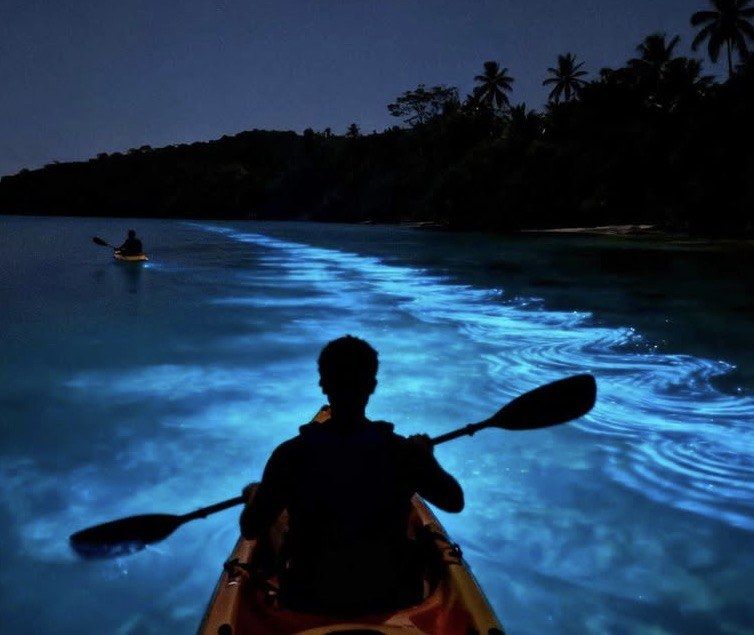
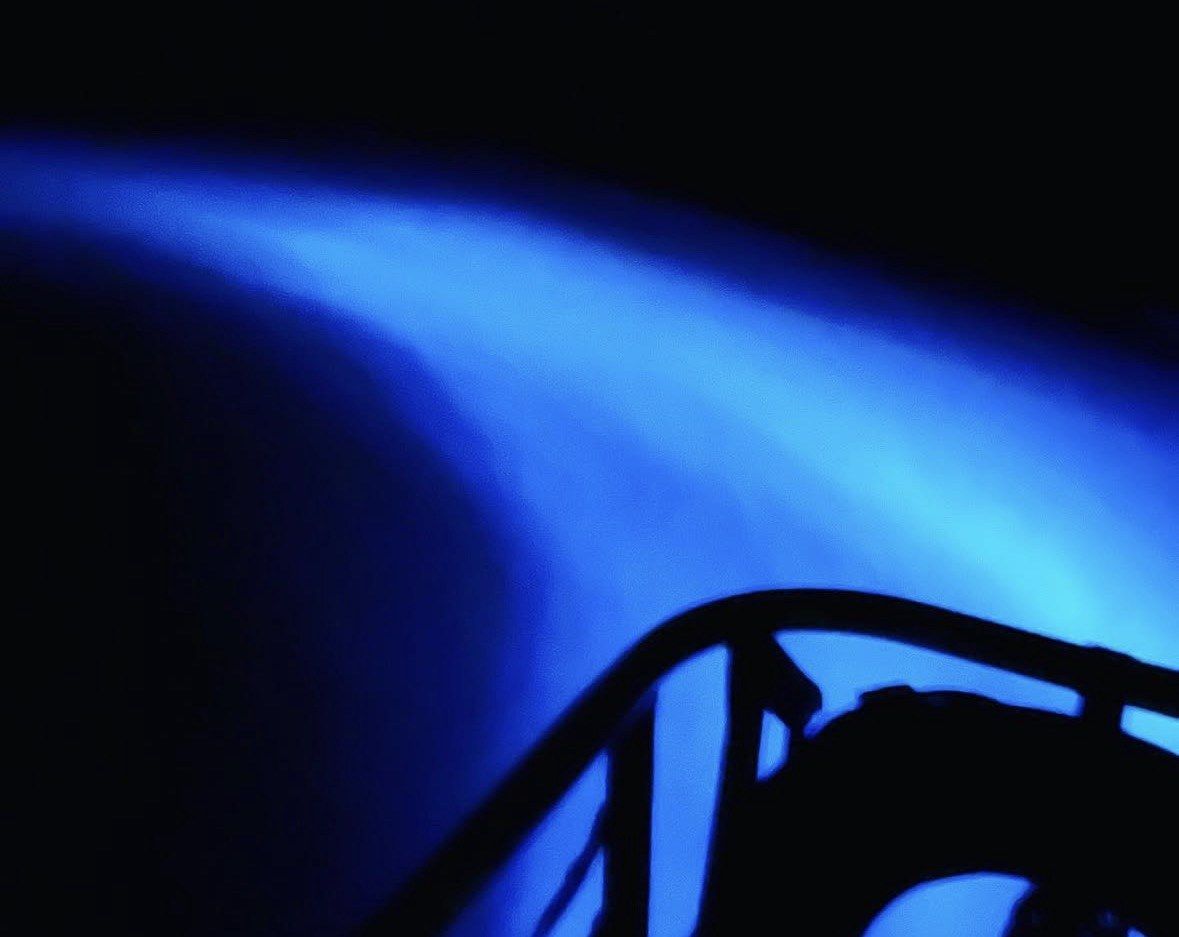
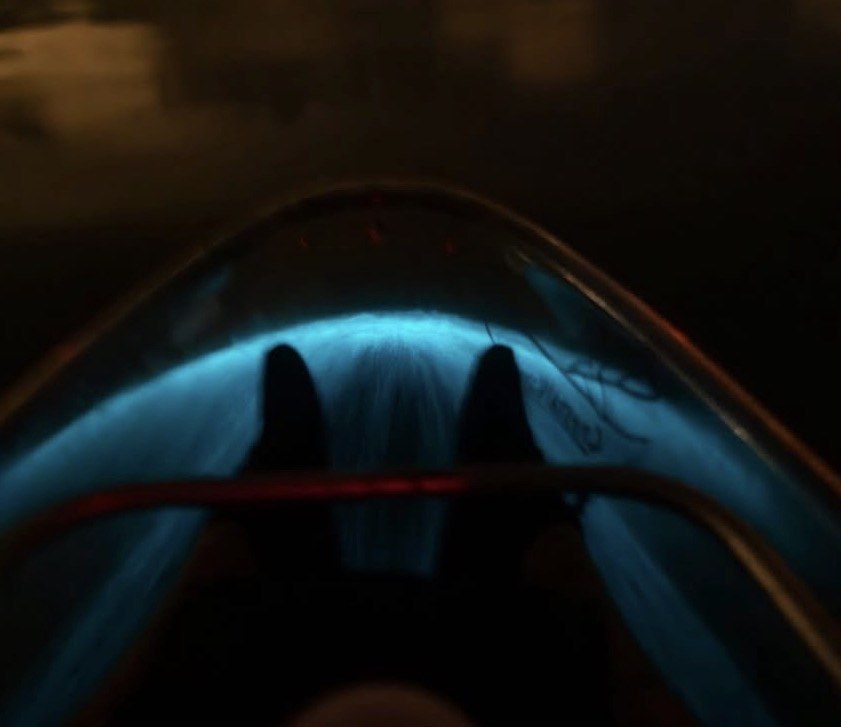
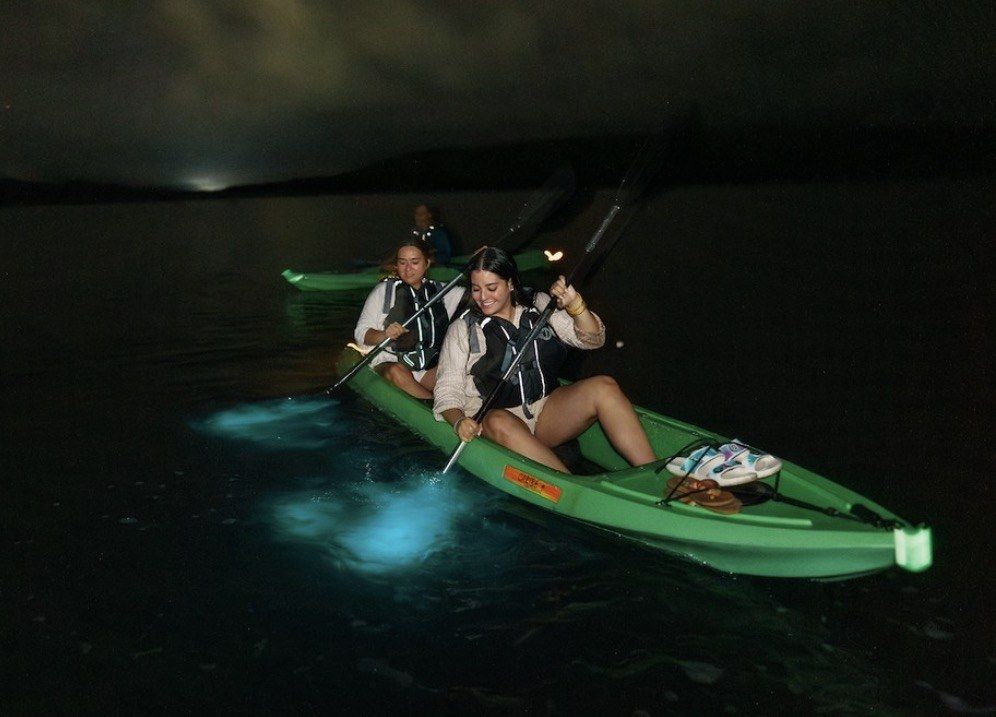
In shortMosquito Bay, or Puerto Mosquito, is a bioluminescent lagoon on the south shore of Vieques, Puerto Rico. The light comes from one dinoflagellate, Pyrodinium bahamense var. bahamense, which flashes when the water is disturbed. Two designations place it: a U.S. National Natural Landmark since 1980, and a Guinness World Records entry from 2006 as the brightest bioluminescent bay. The only way in is with a licensed concessionaire.
1980National Natural Landmark
700,000Dinoflagellates per gallon
200,000+Visitors a year
from $652-hour kayak trip
What is Mosquito Bay, in plain terms
Puerto Mosquito sits on the south side of Vieques, the island off Puerto Rico's east coast, and it is enclosed enough for one microscopic organism to build up in huge numbers. That organism is a dinoflagellate, Pyrodinium bahamense var. bahamense. It flashes blue when the water around it moves. A paddle stroke, a hand over the side, a fish under the hull: all of it shows up as light.
Federal recognition came in 1980, when the bay was proclaimed a U.S. National Natural Landmark. The landmark record lists Puerto Rico's Department of Natural and Environmental Resources as the territorial owner, and the citation calls Puerto Mosquito the best example of a bioluminescent bay in the United States. Guinness World Records followed in 2006, entering it as the brightest bioluminescent bay on a count of up to 700,000 dinoflagellates per gallon of water.
Water quality is part of what makes the place what it is. In EPA's wording this is the only pristine bioluminescent bay in Puerto Rico, and DRNA's own classification puts the water in Class SA, the top category for ecological and recreational value. The trust that co-manages the reserve goes further and calls it the brightest and most pristine bio bay in the world.
Who looks after the bay, and why the rules are strict
DRNA manages the natural reserve and co-manages it with the Vieques Conservation & Historical Trust, the Fideicomiso de Conservación e Historia de la Isla Nena, which has served Vieques for 40 years. The trust handles erosion control, water-quality monitoring and the weekly dinoflagellate counts, and reports that the bay receives more than 200,000 visitors each year.
The road in is the threat closest at hand, because sediment and runoff coming off it are recognised as a problem for the bay. That is why a two-year project worth $74,999, paid for by the EPA, put the trust, DRNA and the USGS to work on keeping that runoff out of the water. Storms do the heavier damage. Hurricane Maria killed almost all the mangroves at the mouth of the bay, and scientists estimated natural recovery could take 15 to 30 years.
Those pressures are why the rules on the night are tight. Entering the water is prohibited by DRNA, in part to keep repellent and sunscreen residues out of the lagoon, and no operator has the discretion to let a guest slide over the side. DEET repellent is banned on tours because it kills the dinoflagellates that make the bay glow, so bring a DEET-free spray or nothing at all. Guides and operators on the bay are covered by a conservation certification program coordinated with DRNA.
- No swimming: a DRNA rule, and operators cannot make exceptions
- DEET-free repellent only; sunscreen and lotion use is restricted
- Bring a towel, DEET-free bug spray, and sandals, flip flops or water shoes
- No jet skis or motorboats for tourist trips inside the bay
- Check that your guide is a certified concessionaire
Why you cannot visit Puerto Mosquito on your own
You cannot drive to the edge of Puerto Mosquito and put a boat in. The water is open only to people in the company of a licensed concessionaire, and kayaks are what most of those concessionaires run. Route 997 and the Sun Bay entrance get you as far as a meeting point in or beside Esperanza, and no further.
Esperanza is where the night starts. The meeting point for the two-hour kayak trip is on Calle Flamboyan, four houses south of the Green Store, across from a yellow and green house and directly next to Rainbow Realty, and round-trip transport from there to the Bio Bay entrance is included. Pickup for the pontoon happens elsewhere, in front of the Sun Bay beach entrance.
Ten people is the ceiling on a group, and the time on the water runs about an hour and a half. There is no visitor centre and no ticket office at the bay; the nearest official visitor point is the Vieques National Wildlife Refuge Administrative Building and Visitor Center on Road 997, Km 3.2, telephone (305) 393-2142, whose land borders the water. The refuge's 2.5-mile moderate trail to the observation platform above the bay is a daytime walk. The glow is seen from the water after dark, with a certified concessionaire.
Start with the two hours by kayak
It is the most reviewed trip on this site at 4.5 from 1243 reviews, the $65 price includes the transfer from the Calle Flamboyan meeting point to the Bio Bay entrance, and the paddling is what sets the water flashing.
★ 4.5/5 · 1,243 reviews
Should you take the kayak or the pontoon?
Take the kayak unless someone in your group cannot paddle. The blade through the water is what sets off the flashes right next to you, you get the longest time out there, and it costs less. The two-hour Bioluminescent Bay Kayak Trip from Vieques starts at $65 and covers the paddle, a life jacket, a guide and the ride from the Esperanza meeting point to the bay entrance.
The pontoon is the answer when paddling is out, for reasons of mobility, nerves on dark water, or because someone in the party should stay seated and dry. The Bioluminescent Boat Tour in Mosquito Bay runs 40 minutes from $85 on a 24-foot pontoon, with an air-conditioned vehicle to the launch and emergency life jackets. Keep $3.00 in cash for the Department of Natural Resources fee, charged separately, and note that ferry tickets, the one night of accommodation and transport from your lodging on Vieques are not included.
Both tours allow a full refund if you cancel at least 24 hours before the scheduled departure time, so you can hold a date and drop it the day before if the forecast or the readings in the bay turn against you.
| Format | From | Duration | Rating | Who it suits |
|---|
| Bioluminescent Bay Kayak Trip from Vieques | $65 | 2 hours | 4.5 ★ (1243 reviews) | First-timers sleeping in Esperanza who want the longest time on the water, with transport to the bay entrance included |
|---|
| Bioluminescent Boat Tour in Mosquito Bay, Vieques | $85 | 40 minutes | 4.4 ★ (262 reviews) | Anyone who would rather not paddle; seated pontoon, pickup in front of the Sun Bay entrance, $3.00 cash fee not included |
|---|
Where the glow stands as of 9 October 2026
The plain facts first. As of 9 October 2026, the bay's bioluminescence had fallen to effectively zero in the last week of September 2026, the end of a gradual decline that began in July 2026. Reporting on it counts this as the bay's third blackout of the century. From the agency side, DRNA secretary Waldemar Quiles has said his technical staff have been working through the drop in readings since July, and that it carries great importance for DRNA.
There is precedent on both sides of this. The 2014 episode ended with the bay lit again, and the roughly seven months when the organisms were absent after Hurricane Maria in 2017 also ended in recovery. Tourism on Vieques is carrying on through this blackout: the mayor said visitors still come even without the bay glowing, and expected improvement by November. Tour companies put it their own way, that the light is there all year while conditions shift, since the ecosystem is a moving thing.
What that means for your booking: if the light is the only reason you are going, check the current condition of the bay before you pay for anything you cannot cancel, and remember that ferry tickets are non-refundable. If you want Vieques for the beaches, the refuge and Esperanza, and would take a lit bay as a bonus, book the island now. Nobody can promise a glow on a given date, which is why the 24-hour cancellation window on the tours listed here is the practical safeguard. Extreme or dangerous weather is a separate case: the operator cancels and refunds.
Pick your night, then your tour
Work in this order: the moon, then transport, then the tour. Three nights of every lunar month are simply closed, since nobody is permitted to run a trip on the night before a full moon, the night of it, or the night after, a restriction operators attribute to DRNA. Their advice is to aim at the new moon end of the cycle, where there is least moonlight and the glow shows up best. On the calendar that means 10 October 2026, then 9 November 2026, 8 December 2026 and 7 January 2027.
Nothing links Vieques to the main island by road, which leaves the ferry from Ceiba or a flight. The island-based evening tours require an overnight stay, and it is worth putting the bay on your first full night so a weather cancellation still leaves you a second chance. The planning pages on this site cover the crossing and the flights, the best stretch of the month to come, and what the night on the water involves.
For the classic version, book the two-hour kayak trip from $65. If nobody wants to paddle, take the 40-minute pontoon from $85. Then check the latest reading on the bay the day before you go.
Questions people ask
Why is it called Mosquito Bay?
Tradition links the name to the Mosquito, a ship said to have belonged to the Puerto Rican pirate Roberto Cofresí. It is repeated locally as legend rather than documented history. The official designation used by the U.S. Fish and Wildlife Service is the Puerto Mosquito National Natural Landmark.
How many people are on a tour?
Groups do not exceed ten people, and a trip on the water lasts about an hour and a half. There is no room for luggage in a kayak, so leave bags at your lodging and wear clothes and shoes you do not mind soaking. Age and health limits vary by company, so confirm them before booking for children.
Can I swim in the bay to see the glow on my skin?
No. DRNA's rules keep people out of the water, partly because of what repellents and sunscreens leave behind, and an operator who let a guest get in would be breaking them. You see the light from the kayak or the boat, in the water you disturb beside you.
Is there an entrance or a visitor centre at the bay?
Mosquito Bay has no on-site visitor centre and no ticket office. For anything you want to ask in person, the closest official desk is the Vieques National Wildlife Refuge Administrative Building and Visitor Center, on Road 997 at Km 3.2, reachable on (305) 393-2142. Access to the water is through a licensed concessionaire only.
Which repellent should I bring?
A DEET-free one, because DEET kills the dinoflagellates that produce the light and is banned on tours. Mosquitoes are worth taking seriously here: the CDC describes dengue transmission in Puerto Rico as frequent, peaking from July through November and carried mainly by Aedes aegypti, so pair that DEET-free spray with sleeves and long trousers for an evening outdoors.
Read also